
Follow the first fifteen minutes
A breakfast corner works best when it follows the sequence of an ordinary morning. Think about opening the cupboard, preparing a drink, setting out food and clearing away. Notice where objects cross the kitchen and where people get in each other's way. You may need a clearer shelf rather than a new piece of furniture. This guide is an editorial planning exercise, with buying criteria you can adapt to the space and routines in your own home.
Begin by taking everything off one relevant shelf or section of counter. Return only what belongs in the breakfast routine. Put occasional serving pieces elsewhere if you have an appropriate place for them. Cleaning and rearranging the existing area gives you a better understanding of its limits before a shopping basket fills with matching containers.
Group by use rather than appearance
Keep frequently used cups together, place suitable bowls where they are easy to retrieve and give the items you reach for each morning a predictable home. Avoid stacking things so high that accessing one piece means removing several others. A shelf can look tidy while still being frustrating to use, especially when someone is in a hurry.
If several people share the kitchen, discuss the arrangement before buying organisers. One person may prefer items near the table while another needs counter space for preparation. A small tray can gather a few things temporarily, but check its weight when loaded. Moving everything at once is only convenient if the tray is comfortable to carry.
Choose storage after the contents
Measure the shelf depth and available height, including room to lift lids and remove containers. Handles, hinges and raised edges can use more space than expected. Check which materials and products are intended for food contact if you plan to transfer ingredients into them. Decorative containers are not automatically suitable for every kitchen purpose.
Keep the original product information when transferring food, including relevant dates, ingredients and preparation directions. You do not need a matching jar for every packet. Leaving some items in their original packaging can be the simplest choice. Buy a small number of containers for a defined need before committing to an extensive coordinated set.
Make seating suit the available room
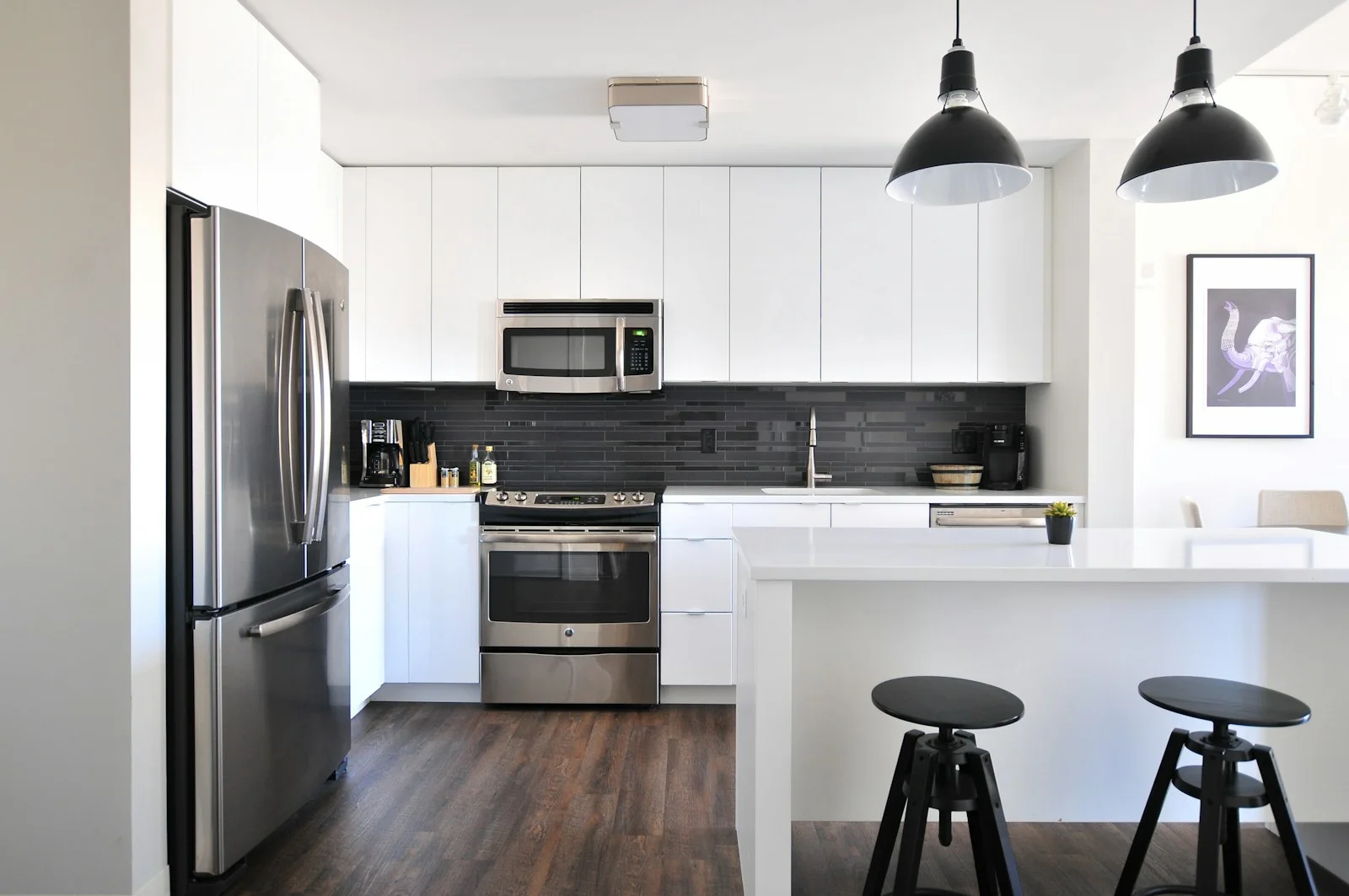
If the kitchen has a breakfast bar, check the dimensions of the counter and the seating recommended for it. Consider legroom, the space behind the stool and whether people can pass when someone is seated. A stool that looks slim online may still make a narrow walkway awkward. Measure the complete footprint, including any splayed legs or projecting backrest.
Choose finishes and upholstery with everyday care in mind. Read the instructions for cleaning spills and check assembly requirements. If the seating will be used by children, assess the specific product's suitability and the household's needs rather than relying on an attractive photograph. Comfortable, appropriate seating matters more than matching a fashionable kitchen image.
Keep the shopping list short
Write down the inconvenience each proposed purchase addresses. A shelf insert might make cups easier to reach; a tray might help move breakfast to the table. If an item has no clear role, leave it off the first order. Compare individual pieces with bundles using the total price of the items you will actually use.
Review the setup after a normal working week. Remove objects that have become obstacles and adjust anything people repeatedly put elsewhere. Check final dimensions, delivered costs and return terms before buying further pieces. A successful breakfast corner is easy to understand and easy to reset. It leaves enough room for preparation while helping the household start the day with fewer unnecessary movements.
Read how we put our guides together, or flag a correction at [email protected].