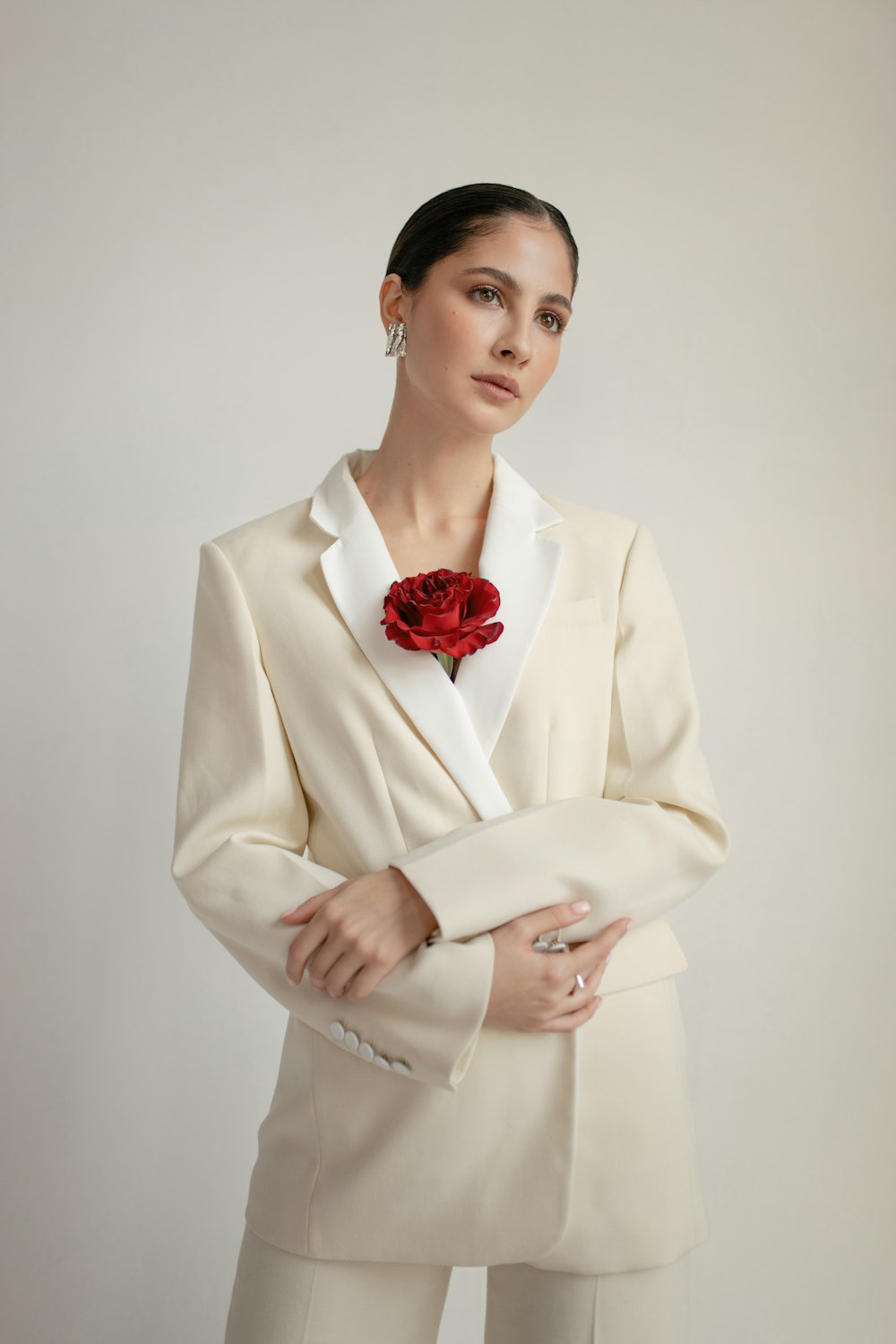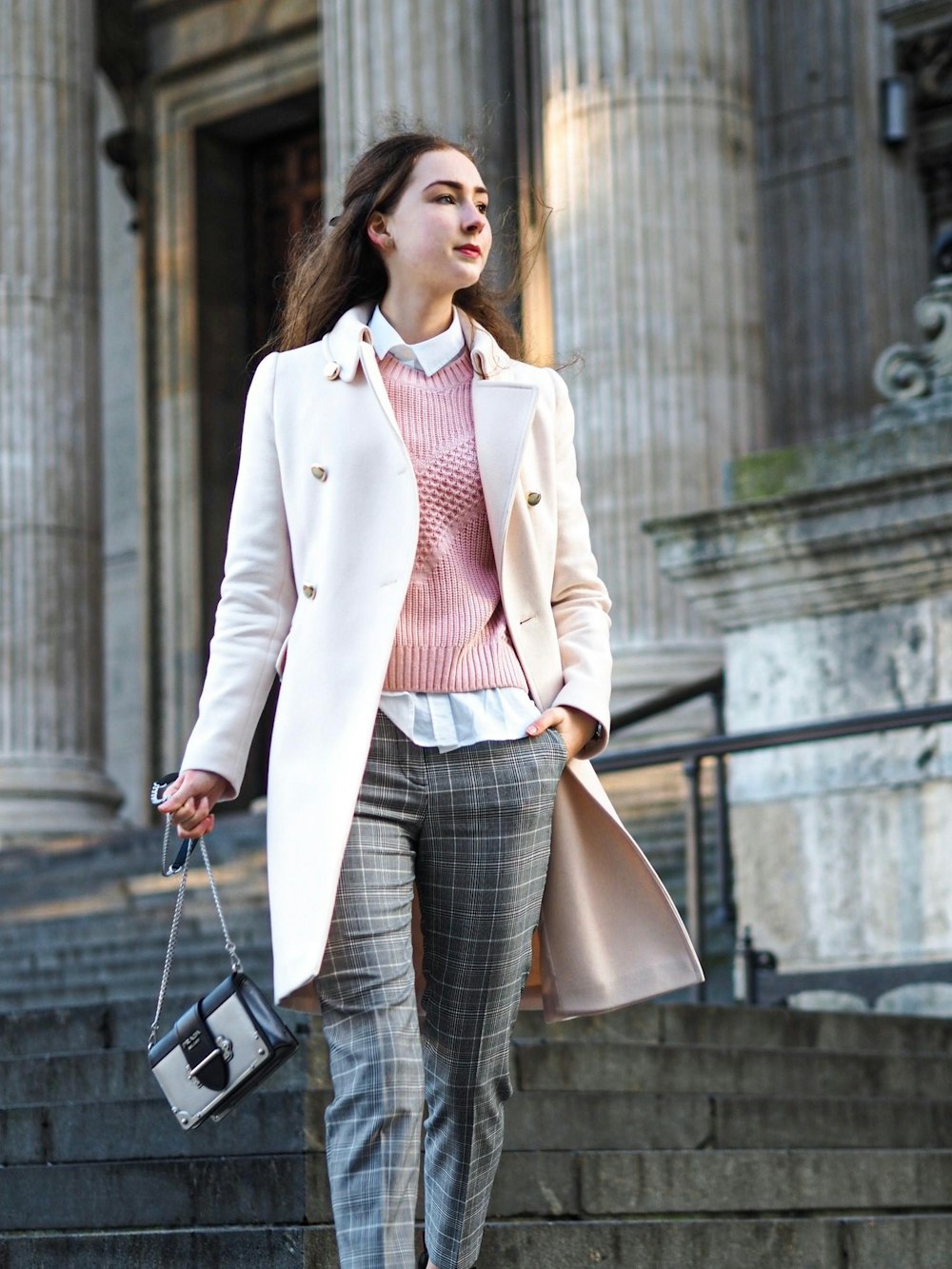
Begin without the extra layer
A scarf can change the appearance of a coat dramatically, sometimes concealing the lapel altogether. Before choosing one, look at the coat with its intended neckline visible. Include the shirt or knit you actually expect to wear underneath rather than comparing the coat over an unrelated fitting-room layer.
Notice the lapel's width and angle. A broad shape can become a strong part of the upper outfit, while a narrow one leaves more attention on the garment beneath. This gives you a starting point for accessories without assuming the neckline needs filling.
Compare the open and fastened outlines
Use the coat's intended fastening and let the lapel settle naturally. Then look at the open version if that is how you commonly wear it. The two outlines may reveal different amounts of the retained top, so include both in the decision.
Do not press the lapel into a new crease or pin it to imitate another design. If it repeatedly sits in a way you did not expect, check the construction and fit rather than forcing a preferred shape. A photograph can explain the designer's intended outline, but the actual garment still needs to work for you.
Look at the nearby details
A high knit neckline, shirt collar and necklace can all sit near the lapel. Start with the pieces required for the day and decide whether they remain individually readable. If the area feels crowded, remove an optional accessory before replacing the coat.
The solution may be a plainer retained top or a smaller visible detail. It need not be an exact colour match. Compare one change at a time so you can identify whether colour, shape or the number of elements caused the improvement.
Add a scarf for a reason
If the day's conditions or your preferred style call for a scarf, introduce it after the lapel comparison. Use an ordinary arrangement you can maintain, and check how it sits when the coat is carried or fastened as intended. Follow the actual garments' care and use requirements.
If the scarf covers a feature you enjoy, decide whether that tradeoff matters for the occasion. You can prefer the coat with a visible lapel on one day and a scarf on another. There is no need to build a permanent accessory rule from a single outfit.
Save the combination that works with your retained clothes. A short note about neckline space, lapel width and the most useful underlayer can guide future dressing. Starting with a clear view helps you add detail deliberately instead of automatically buying another scarf to solve an outfit question you have not yet identified.
Related reading
Check a Scarf With the Coat Open and Closed, Look at a Long Coat’s Front Outline When Fastened.
Read how we put our guides together, or flag a correction at [email protected].