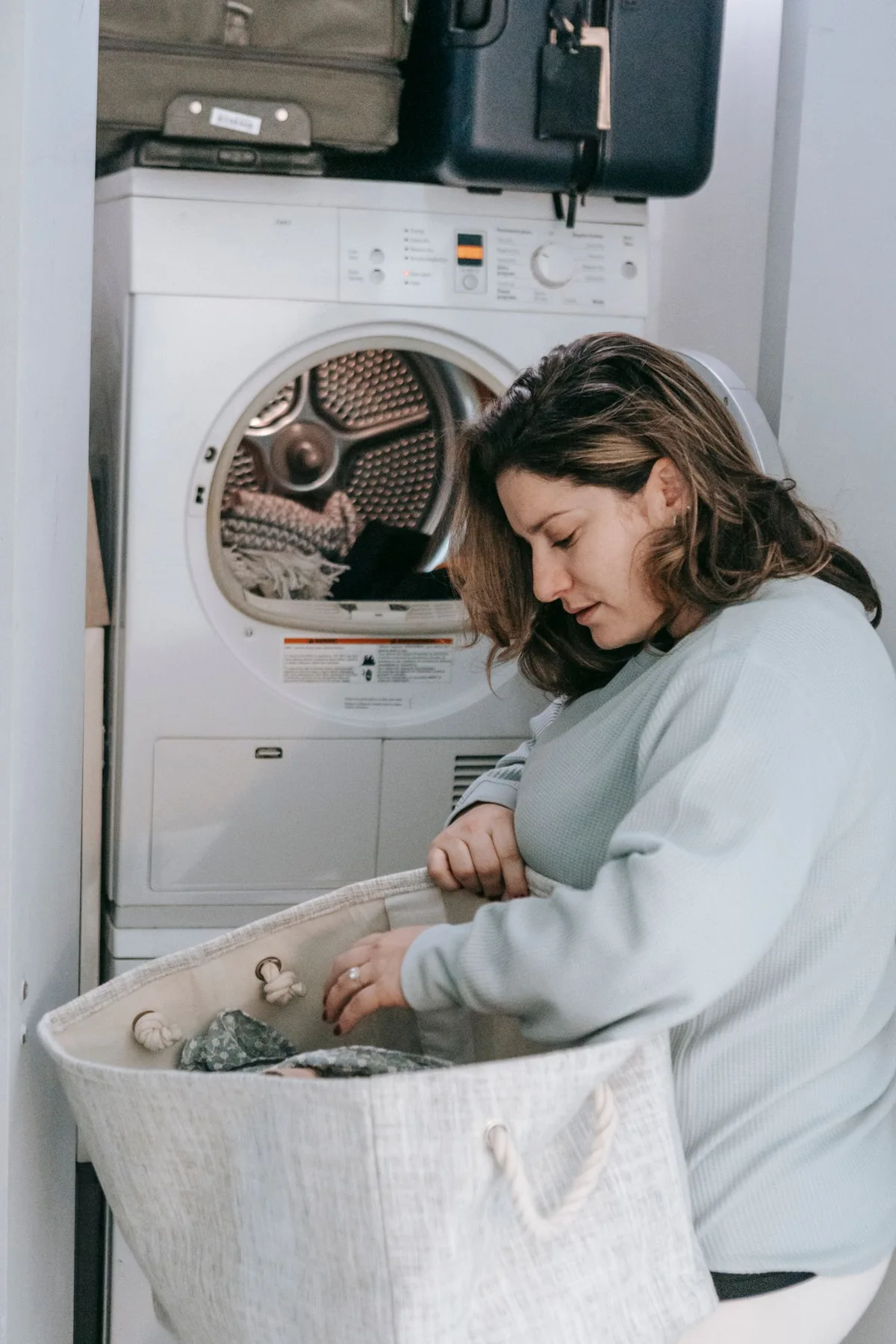
Read the garments before choosing the load
A wardrobe wash can create a crowded room when several layers need different drying arrangements. Start with each garment's care label and the appliance instructions. Separate the actual requirements rather than assuming similar colors or textures belong in one process.
Choose a manageable set that can complete its full care routine. The washing stage is only part of the task. A clear suitable drying position and an accessible wardrobe destination help the useful clothes return to wear.
Measure the active drying shape
Consider the garments in the positions their care guidance requires. A rack's empty frame can occupy less room than the fabric hanging or resting on it. Keep doors, exits and ordinary routes clear and follow product load and use instructions.
Check the room during the hours the garments will be there. A position that works briefly may interfere with meals, work or evening seating. Choose an appropriate arrangement before the machine finishes instead of improvising around a wet load.
Keep drying stages identifiable
Separate items still completing care from garments ready to return to storage. Do not put uncertain damp clothing into a closed wardrobe simply to clear the room. Follow the actual textile and equipment guidance.
Keep an appropriate temporary position for ready items if needed, but give it a clear next action. A sofa pile of dry clothes can become a second wardrobe when the final storage is crowded. The care plan should continue through putting away.
Prioritize useful outfit pieces
Choose which ready garments will help the coming days and return them to their normal positions. Keep repair questions separate from the active wardrobe. A piece should be recorded as ready only when its required care and condition support that use.
Our care-label guide helps connect purchases with maintenance. The wardrobe guide can identify the layers actually used repeatedly. More spare clothing may conceal a care bottleneck rather than solve it.
Review the real obstruction
Notice whether the difficult stage was the rack footprint, a garment's particular care need or a full drawer. Address that specific issue before buying another organizer. A different schedule or smaller suitable load may help more than larger equipment.
Our wardrobe audit supports checking the destination. Keep the routine proportionate to the household and the textiles. The useful outcome is clothing that can be found and worn, with the room available for its other jobs.
Drying-plan questions
Is a taller rack always better for a small room? Compare the actual loaded shape, access and product instructions. Height alone does not describe suitability.
Should every layer be washed together? Follow individual care and appliance guidance. A convenient group is not automatically a suitable load.
What if clothes remain out for days? Follow one garment to its destination and identify where the process stalls. Buying another rack will not fix an inaccessible or overfilled wardrobe.
Read how we put our guides together, or flag a correction at [email protected].