Choose the opening you actually use
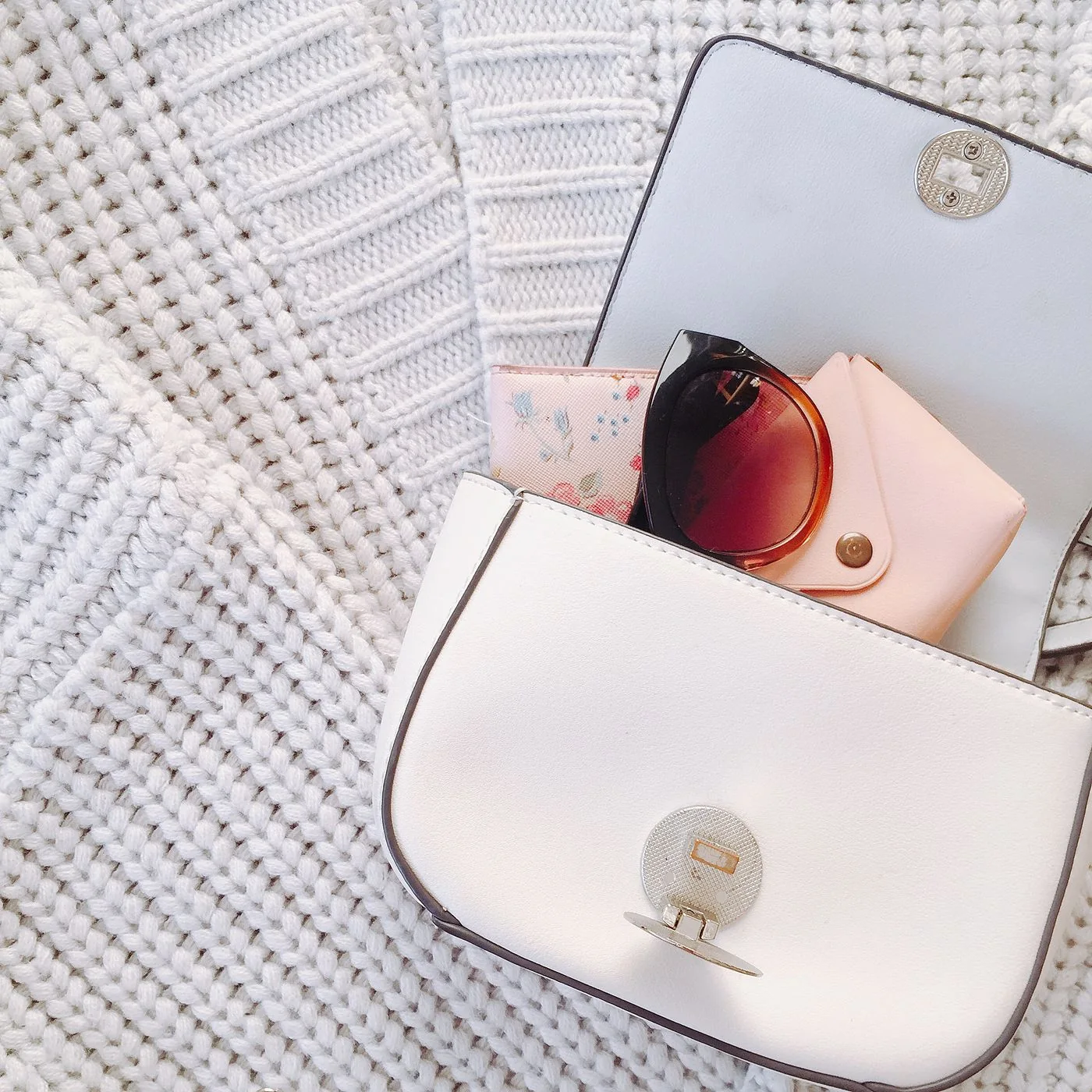
A handbag clasp can look elegant in a still photograph while requiring more attention than you want during an ordinary day. Start with a specific moment: finding a travel card beside a station gate, taking out a phone at a table or putting keys away outside your front door. These actions reveal more than repeatedly opening an empty bag on a clear counter.
Keep the comparison simple. Use the small group of belongings you ordinarily carry, without adding heavy objects just to create a test. A bag intended for occasional light use should not be judged as though it were a work tote.
Notice the sequence of movements
Count the actions in practical terms rather than seeking a universal score. Do you lift a flap, turn a clasp and then open a zip? Can the bag rest securely while you do this, or does it need a second hand to hold its shape? The answer may be perfectly acceptable for one routine and inconvenient for another.
Try the fastening with the bag carried in its intended position. An opening that is clear on a tabletop may angle away when the strap is on your shoulder. Do not force a closure or overload the bag to make access look more difficult; follow its intended use.
Include the closing step
Finding an item is only half the process. Put it back and close the bag as you would before moving on. Notice whether a fabric edge, inner pouch or loose strap end repeatedly gets in the way. A small adjustment to the contents may solve the problem without needing a different bag.
Keep small items in suitable existing compartments where they remain identifiable. Adding a new pouch can create another opening inside the first one. Use one only if it makes a specific group easier to retrieve, rather than assuming more compartments automatically mean better organisation.
Compare tradeoffs openly
A more structured closure may help keep the opening defined but take longer to operate. A broad opening may make contents visible while requiring more deliberate closing. Neither characteristic proves security or protection beyond what the maker states. Decide which ordinary inconvenience you are willing to accept.
If the clasp is unfamiliar, ask for the correct operation instead of experimenting with force. Check the supplied care and repair information before buying a replacement for a closure that may simply need proper adjustment.
Finish with one clear observation: the clasp suits relaxed outings, it interrupts frequent access or it works once a particular item moves to another compartment. That conclusion connects the decorative detail to your real routine and makes future comparisons much more useful.
Related reading
Try a Crossbody Strap Over the Coat You Actually Wear, Build a More Considered Shopping Routine.
Read how we put our guides together, or flag a correction at [email protected].