Include the pockets in the outfit
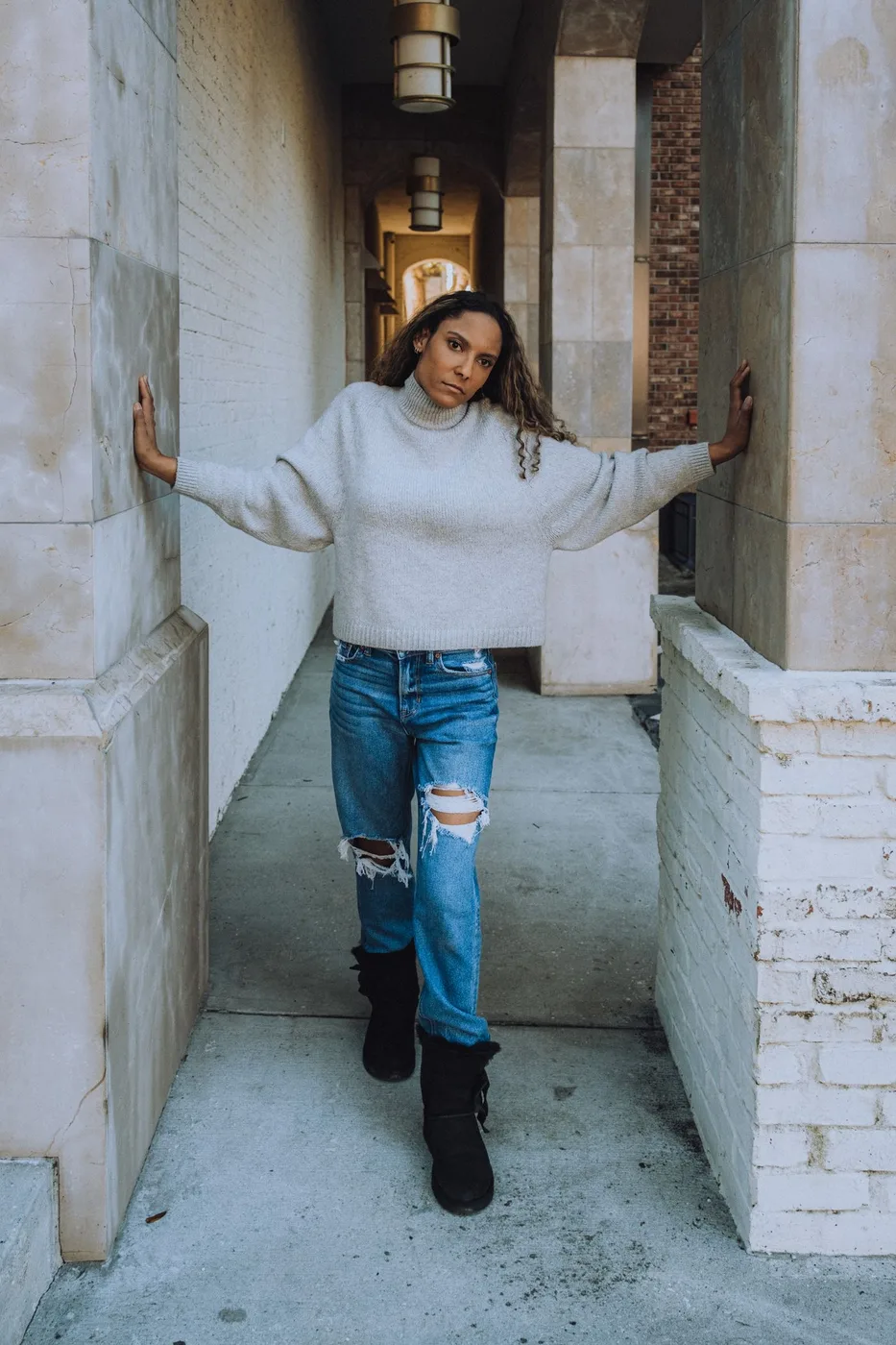
Jeans are often selected for wash and leg shape, but their pockets also contribute to the visible outline. Look at the front, side and back with the top you intend to wear. A long shirt may cover most of the detail; a shorter knit leaves it part of the complete outfit.
Do not begin with a rule about the one correct pocket shape. Construction varies, and personal preferences differ. The useful comparison is whether the visible lines suit the jeans' overall design and the clothes you already use with them.
Compare standing and seated views
Stand normally in a clear mirror and look at the pocket edges without pulling the fabric into place. Then sit and stand again as the fitting space allows. Notice whether the garment returns to the outline you expect or repeatedly needs arranging.
Keep the jeans' actual fit in the foreground. An appealing pocket detail cannot resolve discomfort, a fastening that does not work for you or a cut that suits none of your ordinary activities. Conversely, an unfamiliar pocket position may simply need a complete view before you decide whether you like it.
Use the top as a controlled comparison
Try one retained top at its ordinary length, then compare another with a clearly different hem. This reveals how much pocket detail remains visible and where the horizontal lines meet. Avoid changing the shoes and accessories simultaneously; the pocket-and-hem relationship is the question for this comparison.
If you normally tuck a shirt, use the arrangement you can comfortably maintain. A carefully pinned or held-in-place fitting-room pose will not tell you how the clothes sit through a normal day. Do not choose jeans on the assumption that a top will always conceal a part you dislike.
Keep appearance separate from storage
A visible pocket is not automatically intended to carry every daily item. Check the design and your ordinary use rather than loading it with heavy objects to see how much it will hold. A phone or key group can change the outline, but that does not establish an acceptable weight for the garment.
When comparing two pairs, record the exact product identity and the reason one works better. “The back outline suits my shorter knit” is more useful than a vague judgment about flattering pockets. Keep any fitting photograph private and within the retailer's rules.
If both pairs work, choose according to the role you need them to fill. The aim is not to scrutinise every seam indefinitely. A clear view with the retained top lets you decide whether the jeans belong in an actual outfit before their small design details become the reason for another uncertain purchase.
Related reading
Try Jeans Hems With the Shoes You Actually Walk In, Keep a Fitting Note Linked to the Actual Jeans.
Read how we put our guides together, or flag a correction at [email protected].