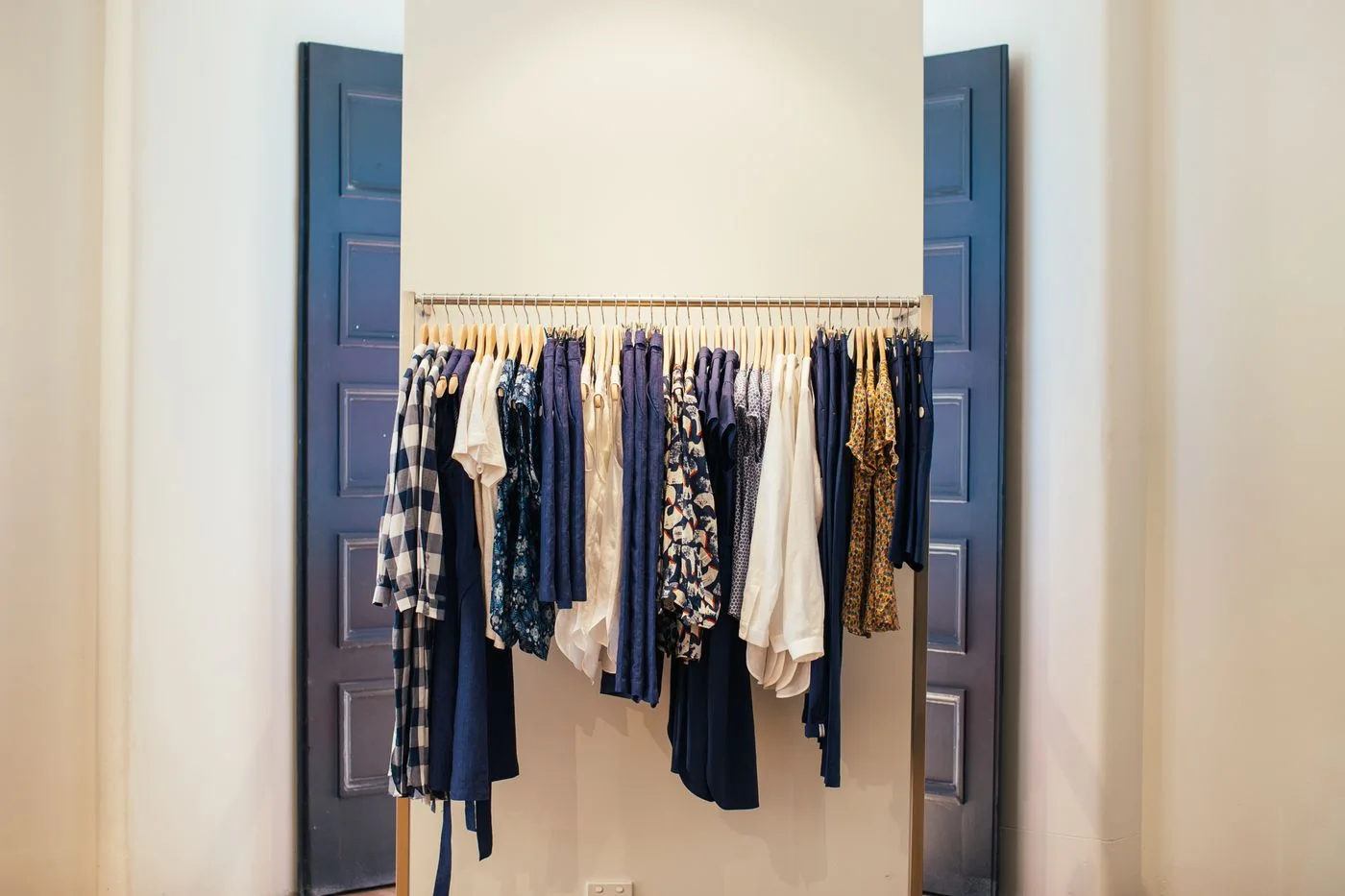
Keep the actual shirt identity clearer than the color row
Several shirts can look related on a rail while serving different outfit and care roles. Begin with the actual garments and make their identities understandable. A visual color sequence should not conceal which shirt belongs to which person or which one is appropriate for the current day.
Follow the garments' storage requirements and the rail's intended use and loading. A photograph of colored shirts does not establish fiber content or a universal wardrobe arrangement. The useful distinction belongs to the actual collection rather than the familiar appearance of a coordinated rail.
Choose the active outfit group
Keep the appropriate current shirts identifiable and give reserve pieces suitable destinations where available. A smaller group can make subtle color differences easier to see without buying more storage. The rail does not need to display every possible shirt at once. For example, two suitable pale shirts may belong to different actual outfits, while another similar-looking garment remains appropriately stored for an occasion outside the current week.
Our practical capsule guide begins with real outfits. A clear shirt group supports that approach without turning the number of garments into the main measure of whether the wardrobe works.
Compare in the ordinary dressing light
Look at the garments where the actual outfit is chosen, and compare another appropriate normal light condition where relevant. Do not claim an exact color match from a screen image. Similar tones can remain different and still serve useful retained combinations.
The two-color garment guide chooses through actual use. Apply that real comparison before treating every near-identical shirt shade as either a duplicate or a missing wardrobe requirement.
Preserve practical differences
Keep care information, fit observations and associated parts linked to the actual shirt. A plain color label alone may not identify the garment accurately enough. If another household member returns clothing, choose a modest clear arrangement rather than expecting them to recognize every subtle shade.
Distinguish appropriately ready shirts from those still needing care or another decision. A neat row can hide several stages if the household uses appearance as the only readiness signal. Keep the actual next action understandable without adding an elaborate label system unnecessarily.
Review the row through ordinary choices
Notice which shirt is repeatedly mistaken for another or overlooked. Identify whether the problem is quantity, lighting, unclear role or a return arrangement that does not match how the clothes are chosen. More sorting by color may not solve the actual issue.
What if the visual sequence is enjoyed and works well? Keep it modest and appropriate. What if another grouping is clearer? Choose it without treating an image as a rule. A considered shirt rail can preserve an appealing palette while making the real garments and their useful differences easy to understand on an ordinary morning.
Read how we put our guides together, or flag a correction at [email protected].