
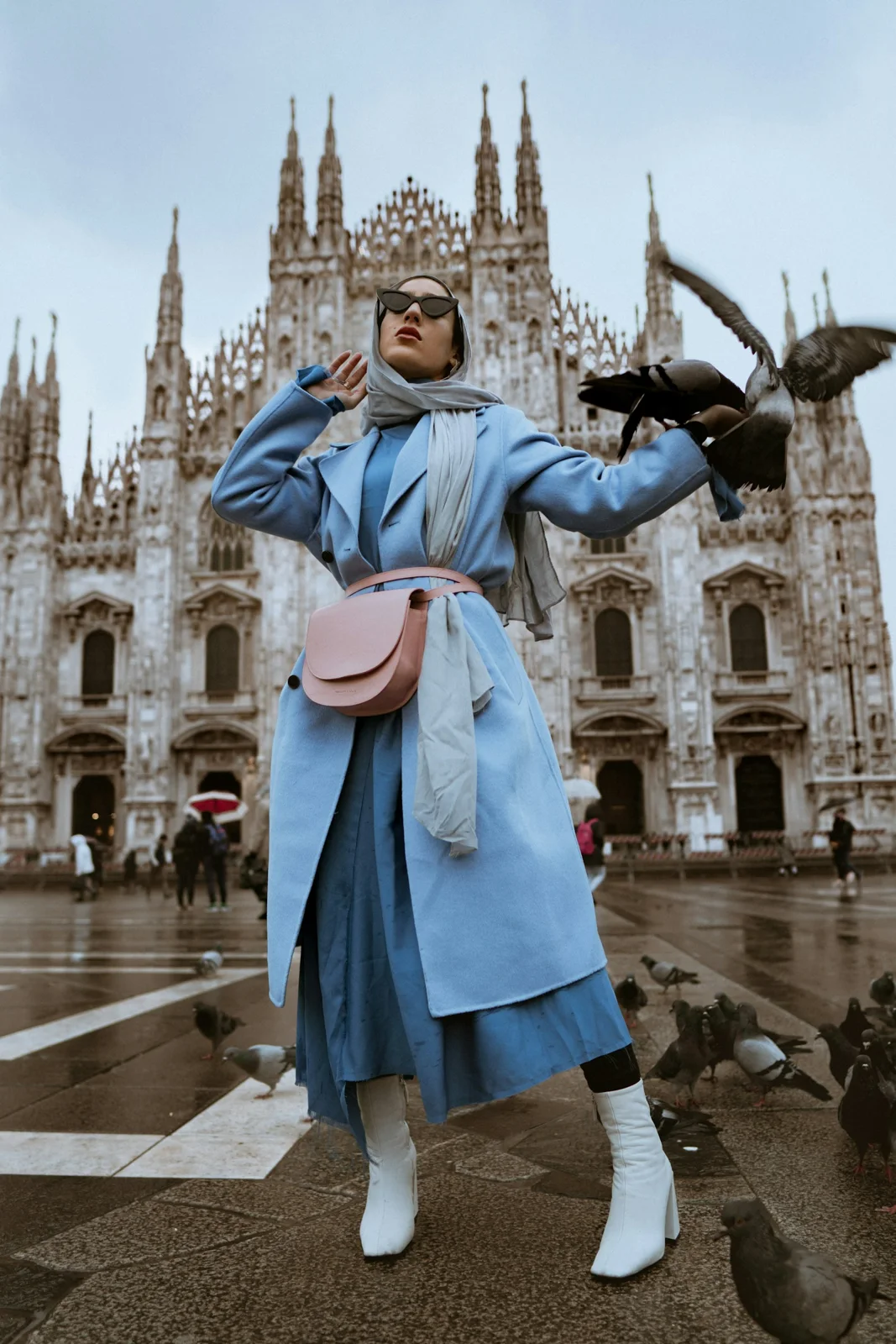
Distinguish the look from the function
A trench-style coat can give an everyday outfit a clear finishing layer, but the appearance alone does not establish weather protection. Read the seller’s specifications if rain resistance or warmth matters to your plans. Start by identifying the conditions in which you expect to wear it and the clothes underneath. This article offers selection and styling criteria rather than a test of the pictured coat. A design that looks striking outside a landmark may behave differently on your commute. Choose for the repeated journey first, then enjoy the visual character it brings to ordinary outfits.
Try it over a realistic outfit
Wear the coat over the thickest normal layer you expect to use, rather than trying it only over a thin shop-fitting-room top. Reach forward, raise your arms and sit down. Check whether the collar feels comfortable and whether the back pulls when you carry a shoulder bag. A roomy coat should still allow you to move without excessive fabric getting in the way. Sleeve length matters when you handle keys or a phone. If an alteration seems necessary, establish whether it is feasible and include the likely cost before deciding that the reduced price is a bargain.
Choose how you will use the belt
A belt can define the shape, but consider whether you actually like fastening it each time. Try the coat open, tied and fully buttoned. Check whether the belt hangs awkwardly when unused or whether the loops sit where you want them. You do not have to copy a styling photograph that wraps the belt in a particular knot. A comfortable everyday method is more valuable than one that takes several attempts. If the coat works only when tightly cinched, ask whether the underlying fit is right for you before relying on the belt to solve every issue.
Connect the length to your shoes
Try the coat with the footwear you wear most frequently and check the complete silhouette. A long hem can feel elegant with flat shoes, but practicality depends on walking, steps and the ground you use. If you wear skirts or dresses, look at the lengths together rather than judging each piece separately. A visible layer beneath the coat can be intentional; it does not have to align exactly. Choose a result you like while moving, not just while standing still. Avoid purchasing new footwear to rescue a coat that otherwise feels difficult to wear.
Keep the rest of the outfit useful
Simple trousers, denim or a familiar dress can provide enough foundation for a distinctive coat. A structured bag may complement the shape, while a soft everyday tote can make the outfit feel relaxed. Both are valid if they hold what you need and sit comfortably. Consider pocket access with the bag in place. If the coat already has large lapels, contrast stitching or a strong colour, you may prefer fewer additional details. Styling should reduce friction rather than add a set of delicate adjustments before you can leave the house.
Review care and return conditions
Read the fabric and care information, inspect fastenings and compare the price with your expected frequency of use. Check whether a removable component has separate care requirements. Online photographs may not show fabric weight or texture clearly, so use the returns window to assess the garment indoors under the seller’s conditions. Your checklist is comfortable layering, manageable length, usable pockets, a belt arrangement you enjoy and a realistic care plan. Keep a record of the combinations that work. A useful outer layer should support the wardrobe you already wear, rather than exist mainly for a single carefully arranged photograph.
Read how we put our guides together, or flag a correction at [email protected].