
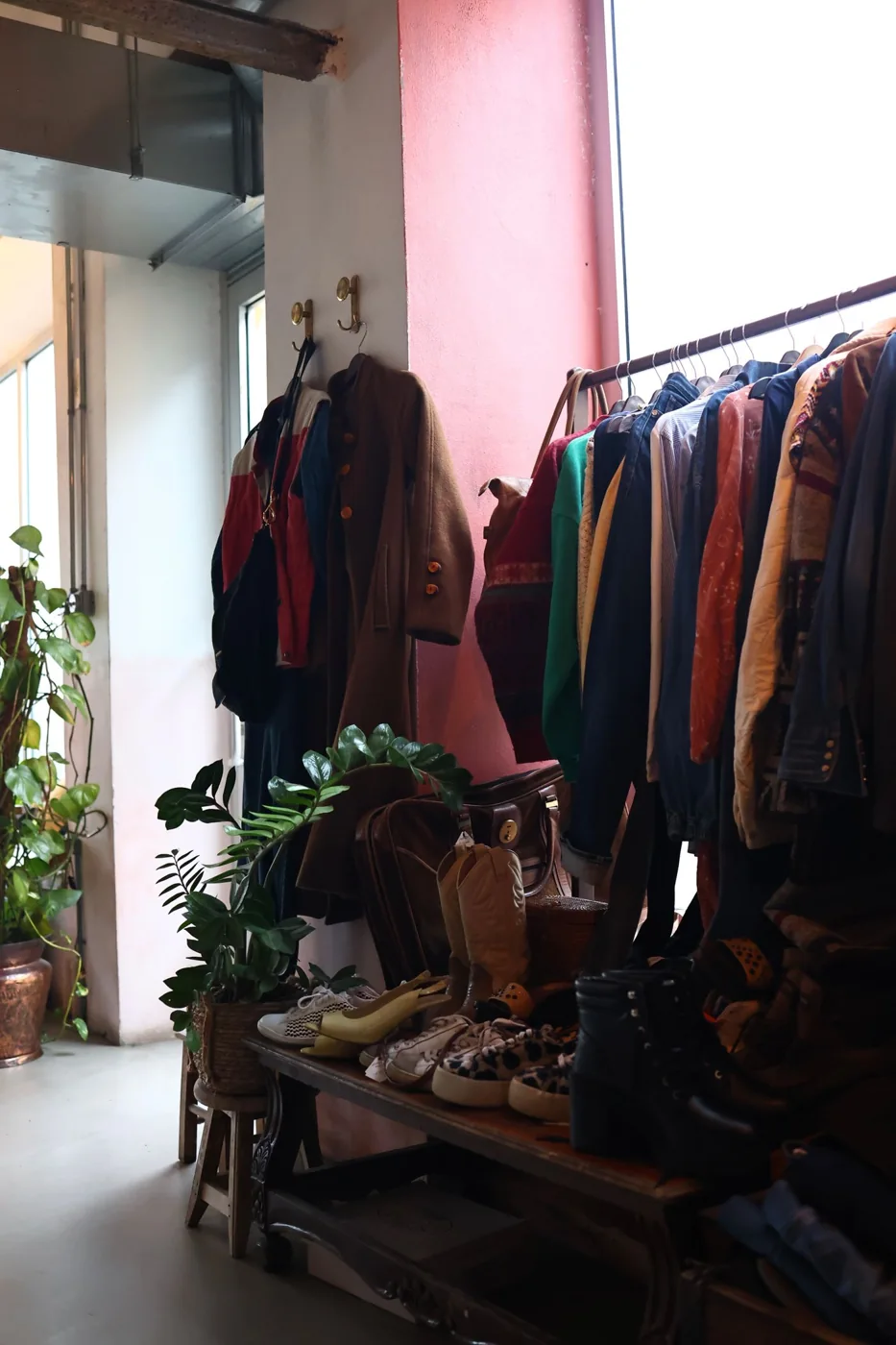
A vintage coat may suggest an outfit immediately, while its interior asks a slower practical question. Look inside before deciding that the garment has a ready role in the wardrobe. The goal is a clear description of its actual condition, with any necessary work understood before the purchase.
Examine without forcing
Follow the seller's handling arrangements and ask before opening or trying on the garment where appropriate. Look at the lining and construction gently. An unfamiliar unlined section may be intentional, so distinguish what you see from a diagnosis of what is wrong.
Check the whole interior rather than only the first visible panel. Sleeves, pockets and the area behind a fastening can raise different questions. Keep the coat's reference with a personal note so those observations remain attached to the correct candidate.
Separate function from decoration
Identify the closures and associated parts that perform the actual work. A decorative button or belt detail may not be intended to carry the fastening load. Ask for clarification if the arrangement is unfamiliar rather than trying combinations until something seems to hold.
Describe a missing or changed part specifically. Its location and role matter more than a general note saying needs repair. Keep the cause open unless it has been reliably established, and do not label a small visible opening as a small job automatically.
Try the retained wearing layer
Where fitting is allowed, use a suitable layer similar to the planned outfit. Check ordinary arm movement and sitting without straining the garment. A coat that is photographed open may behave differently in its intended closed position.
Look at front, side and back as part of that ordinary use. The interior inspection and fit comparison answer different questions, and neither replaces the other. A lining issue may remain relevant even when the outer silhouette is appealing.
Establish the repair dependency
If the purchase depends on a repair or alteration, seek an appropriate reliable assessment before treating the work as certain. Include the actual fabric and construction in the question. A replacement component that looks close does not establish that the whole garment can achieve the result imagined.
Decide what finish would be acceptable. A functional visible repair and an invisible restoration are different expectations. Keep that choice honest in the purchase note, along with known material and care information.
If an essential answer is unavailable, postponing the decision can be the useful outcome. The coat's character does not need to be denied for its practical commitment to remain uncertain. An informed wardrobe addition joins an actual outfit plan with an understood condition, rather than relying on a future fix that nobody has yet confirmed.
Related reading
Read the Care Label Before You Buy the Clothes, Keep Useful Notes About Clothes You Decide Against.
Read how we put our guides together, or flag a correction at [email protected].