Notice the line already present
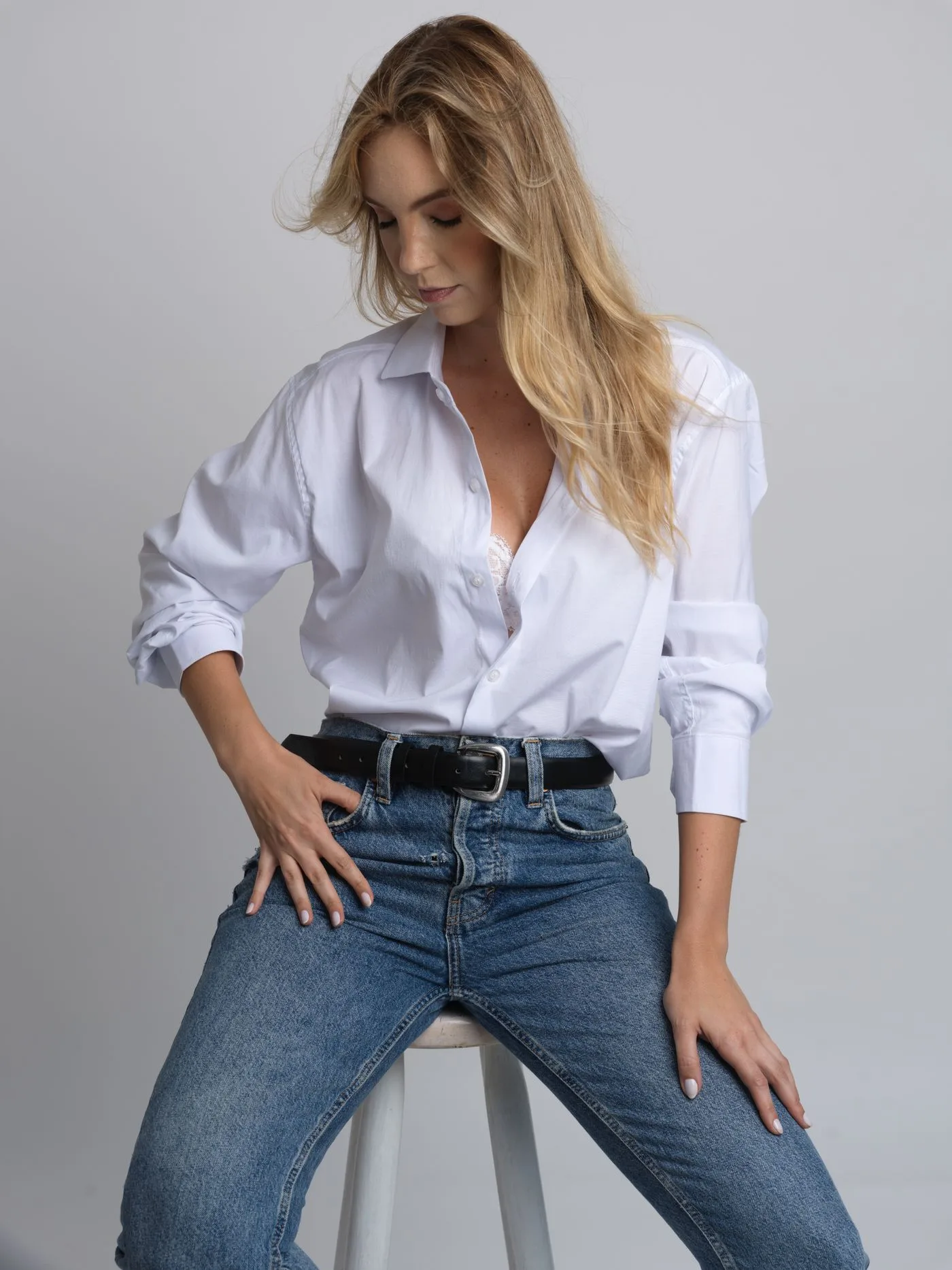
The button placket of a white shirt can create a clear vertical detail without another accessory. Look at the shirt within a retained outfit and notice whether that line remains visible or disappears into the surrounding light fabric.
A dark lower half often makes the shirt's outline more distinct, while pale trousers create a softer relationship. Keep the actual clothes in the comparison. A product image of a white shirt alone cannot tell you how much contrast your outfit will contain.
Compare intended fastening options
Use the shirt's ordinary buttons and comfortable fit. A more open neckline may reveal a retained underlayer, while a higher fastening keeps the shirt's own front more continuous. Choose from the arrangements the garment is designed to support rather than pulling fabric into an invented shape.
Check the view after sitting and standing. The placket should not require you to hold the shirt in place for the outline you prefer. If fastening produces unexpected pulling, consider the cut and size rather than using an accessory to distract from the issue.
Keep the lower boundary clear
Look at the relationship between the shirt hem, waistband and any belt. These lines can either support the placket's simple direction or make the middle of the outfit feel crowded. Try the ordinary hem arrangement you can maintain through the day.
If you compare a tucked version, use it as you actually would, with suitable room for movement. A temporary fitting-room fold is not evidence that a shirt will sit that way all morning. Keep the shoes and jewellery unchanged so the effect of the shirt's arrangement remains identifiable.
Add a layer with a specific role
Put on the retained jacket or knit you plan to wear. Notice how much of the white front remains visible. An open layer can frame the placket, while a closed one may leave only the collar and a small section below. Decide whether that amount of detail suits the complete outfit.
You do not need to add a necklace simply because the shirt is plain. The fastening, collar and contrast may already provide enough structure. If you want another accessory, compare one at a time and look from an ordinary distance rather than only at a close neckline photograph.
Keep the preferred combination in a short outfit note. Name the shirt, the retained lower half and the fastening arrangement that worked. This turns a familiar basic into a repeatable outfit without inventing a new shopping requirement. A simple visible line can be enough when its relationship to the rest of the clothes is clear.
Related reading
Check a Long Shirt Under a Jacket Before Leaving Home, Three Ways to Wear a Relaxed Shirt Beyond the Office.
Read how we put our guides together, or flag a correction at [email protected].