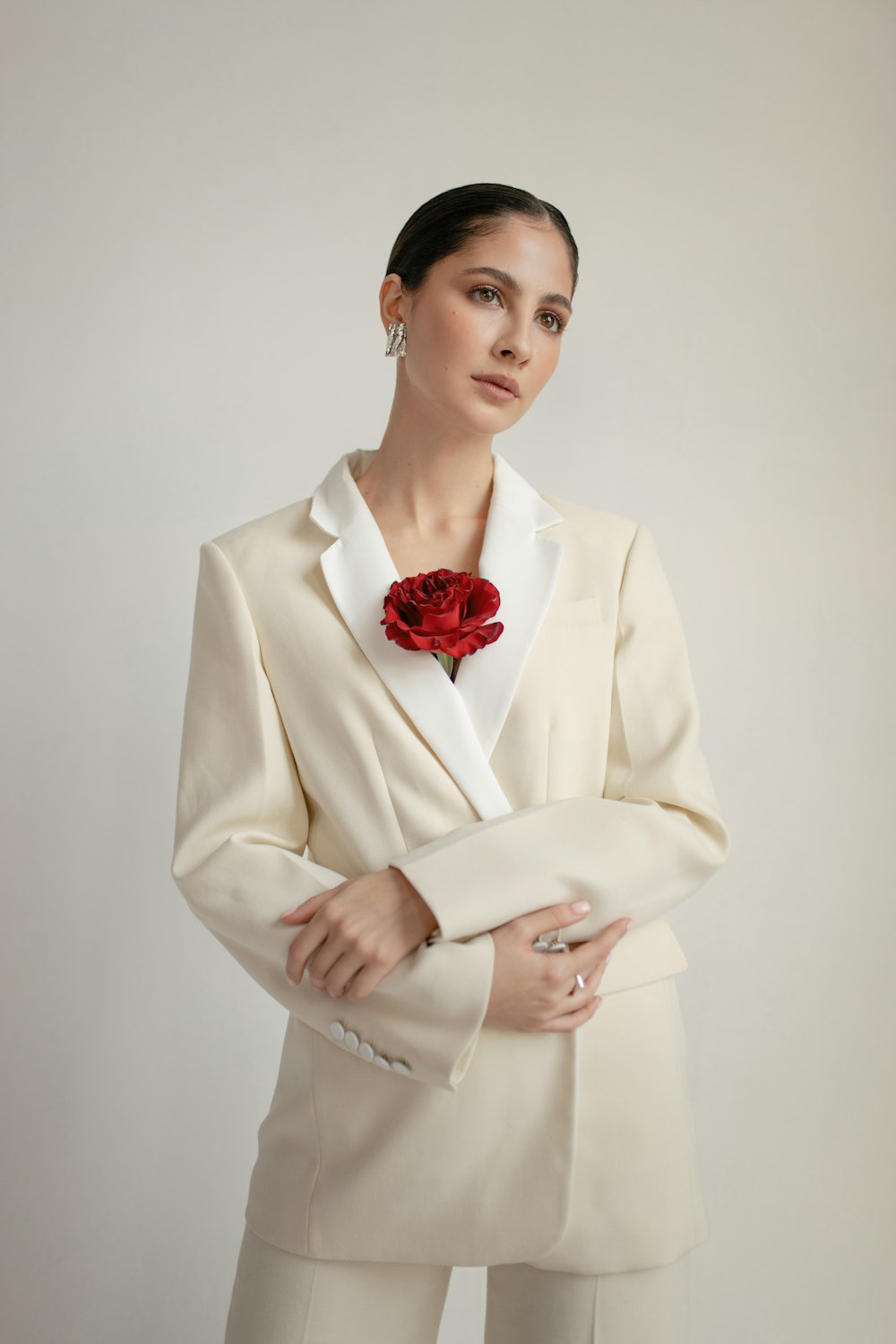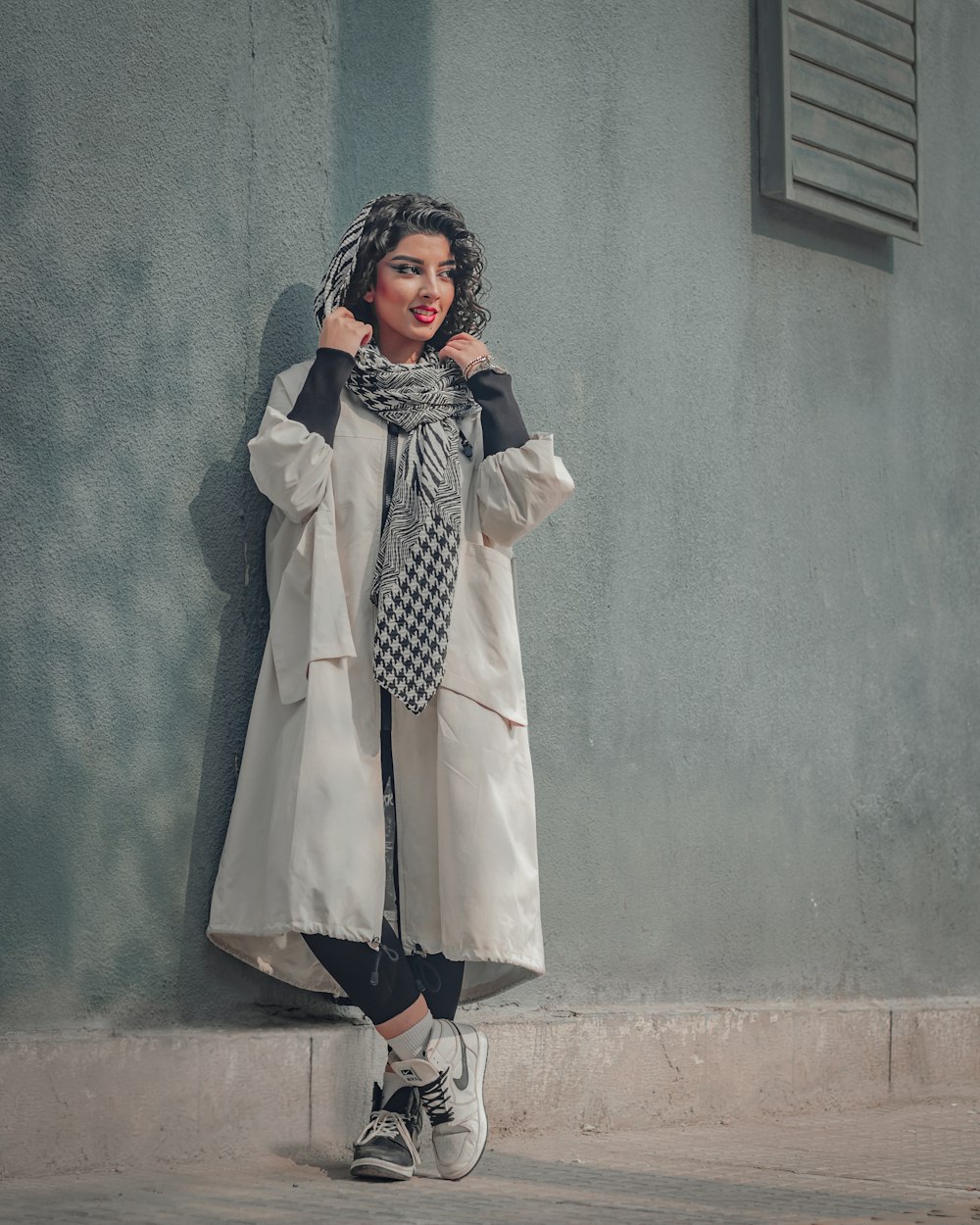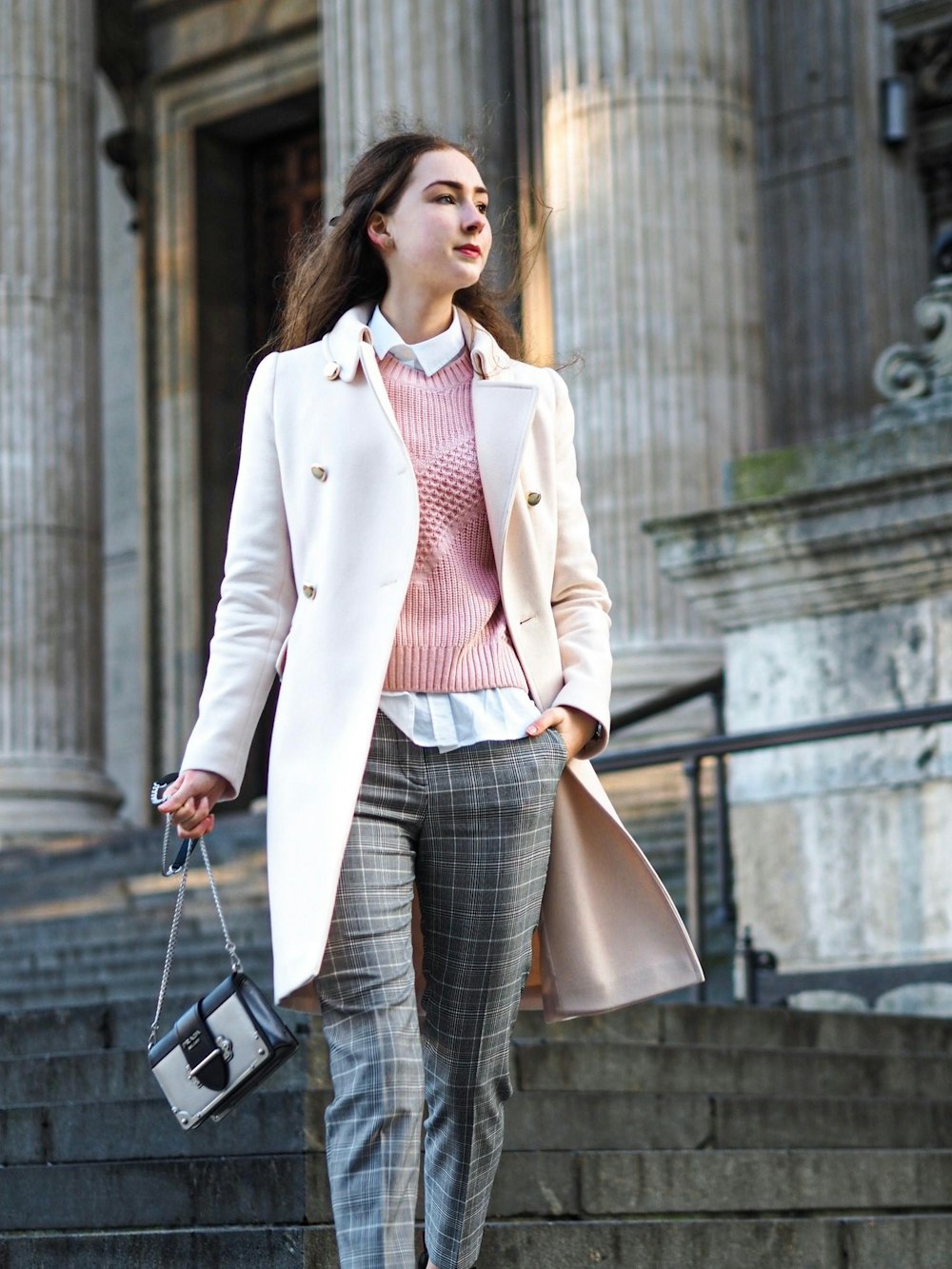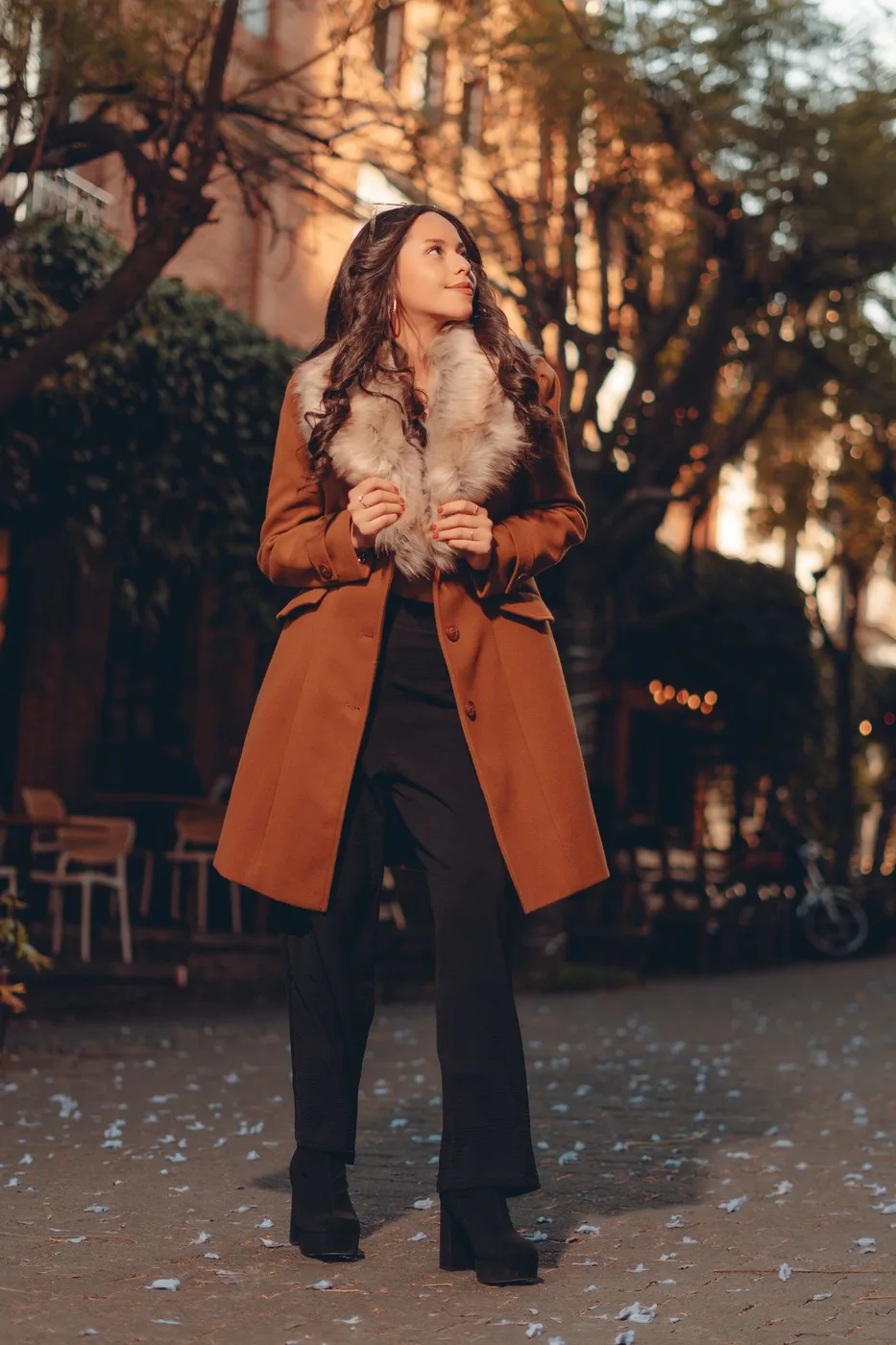
Establish the intended options
A coat belt may be designed to tie at the front, pass through specific loops or detach in a particular way. Start with the actual garment's construction and information. Do not assume a loose arrangement seen on another coat is appropriate for yours.
Lay out the ordinary outfit first, including the clothes underneath. The belt changes how much of that outfit remains visible, so comparing it over unrelated layers can leave you with an attractive arrangement that does not serve a real day.
Look at the tied silhouette
Tie or fasten the belt using its intended method without pulling the coat tighter than its design or your comfort permits. Stand normally and look at the front and side. Notice how the fabric gathers and whether the lapel and lower front settle as expected.
Then move as you ordinarily would in the fitting space. A carefully arranged knot may shift after sitting or reaching. You are not looking for a perfect photograph; you are checking whether the everyday version is one you enjoy and can manage without repeated adjustments.
Compare the loose version
If the design permits a loose or open arrangement, check where the belt ends sit. They should not create an avoidable catching or dragging problem. Do not improvise a new attachment simply to keep an appealing outline; ask about the intended handling where it is unclear.
Look at the amount of underlayer now visible. An open coat can reveal a stronger vertical line, while a tied version makes the coat's own colour and shape more dominant. Keep the shoes and retained lower half unchanged so you can see this difference clearly.
Choose for the actual outing
The tied arrangement may suit one combination and the loose version another. Consider where you will remove, carry or hang the coat during the day. A belt that needs careful re-threading each time may be inconvenient for frequent changes even if you like the finished shape.
If neither version looks settled, check the garment's fit and the thickness of the underlayer before blaming the belt alone. An overfilled coat can pull in several places. A simpler retained layer may reveal whether the intended cut works for you.
Keep a clear note or ordinary mirror photograph of the preferred combination. Record the real method and garment identity rather than copying a knot from an unrelated coat. The goal is a repeatable outfit decision, with the belt serving the coat's design and your day's needs. You can use both intended options without turning one attractive pose into a rule for every occasion.
Related reading
Look at a Long Coat’s Front Outline When Fastened, Test Coat Sleeves With the Layer You Will Wear Underneath.
Read how we put our guides together, or flag a correction at [email protected].