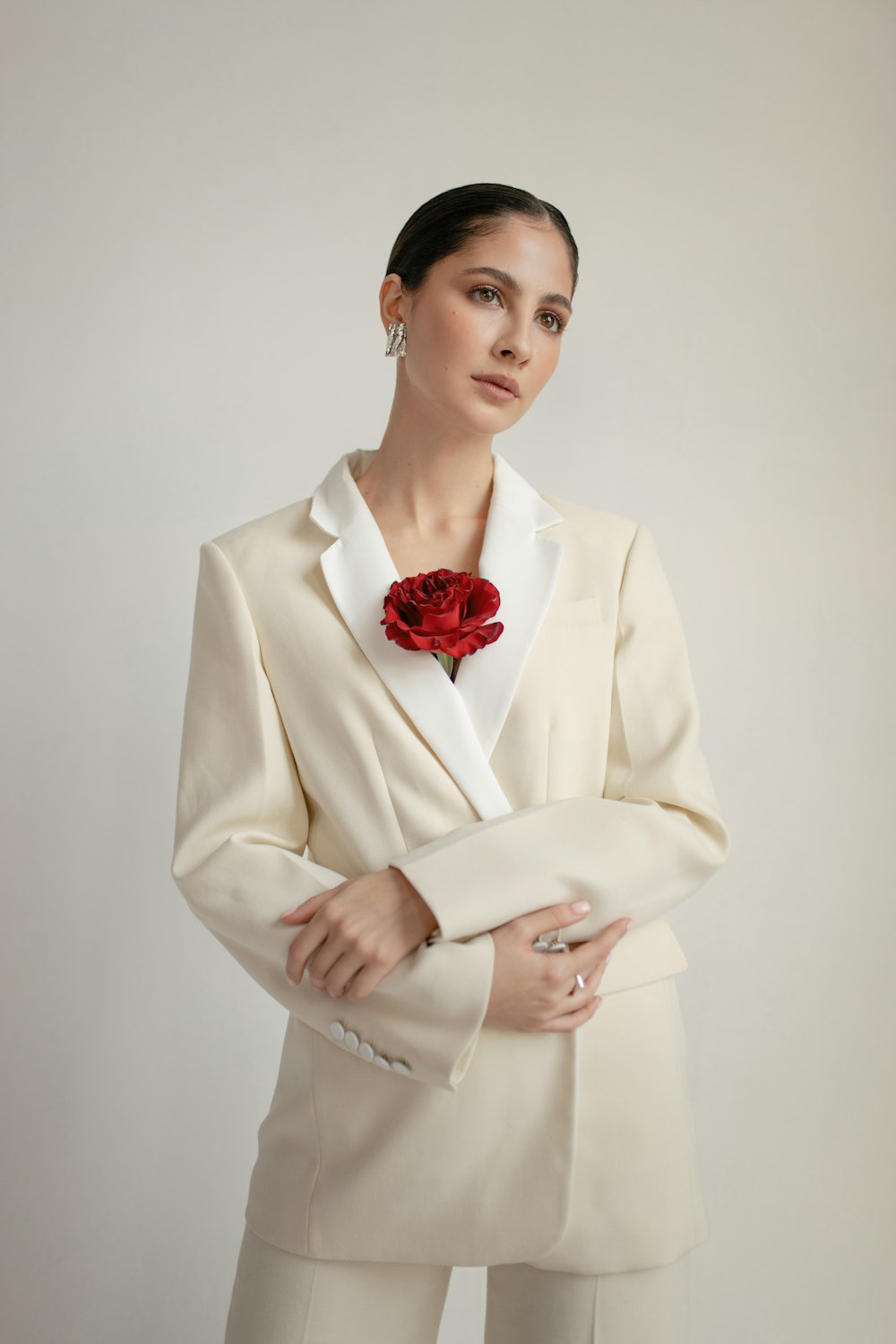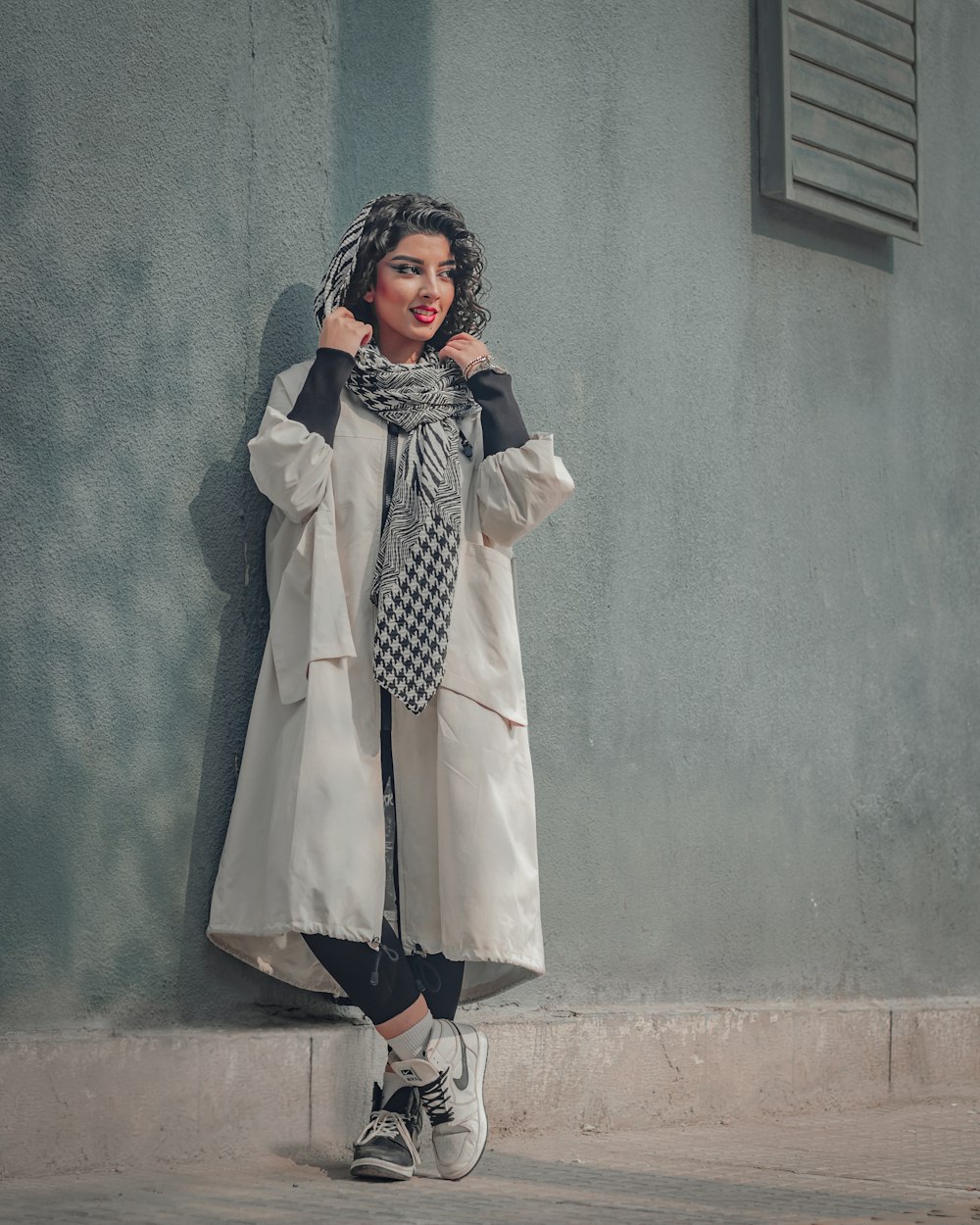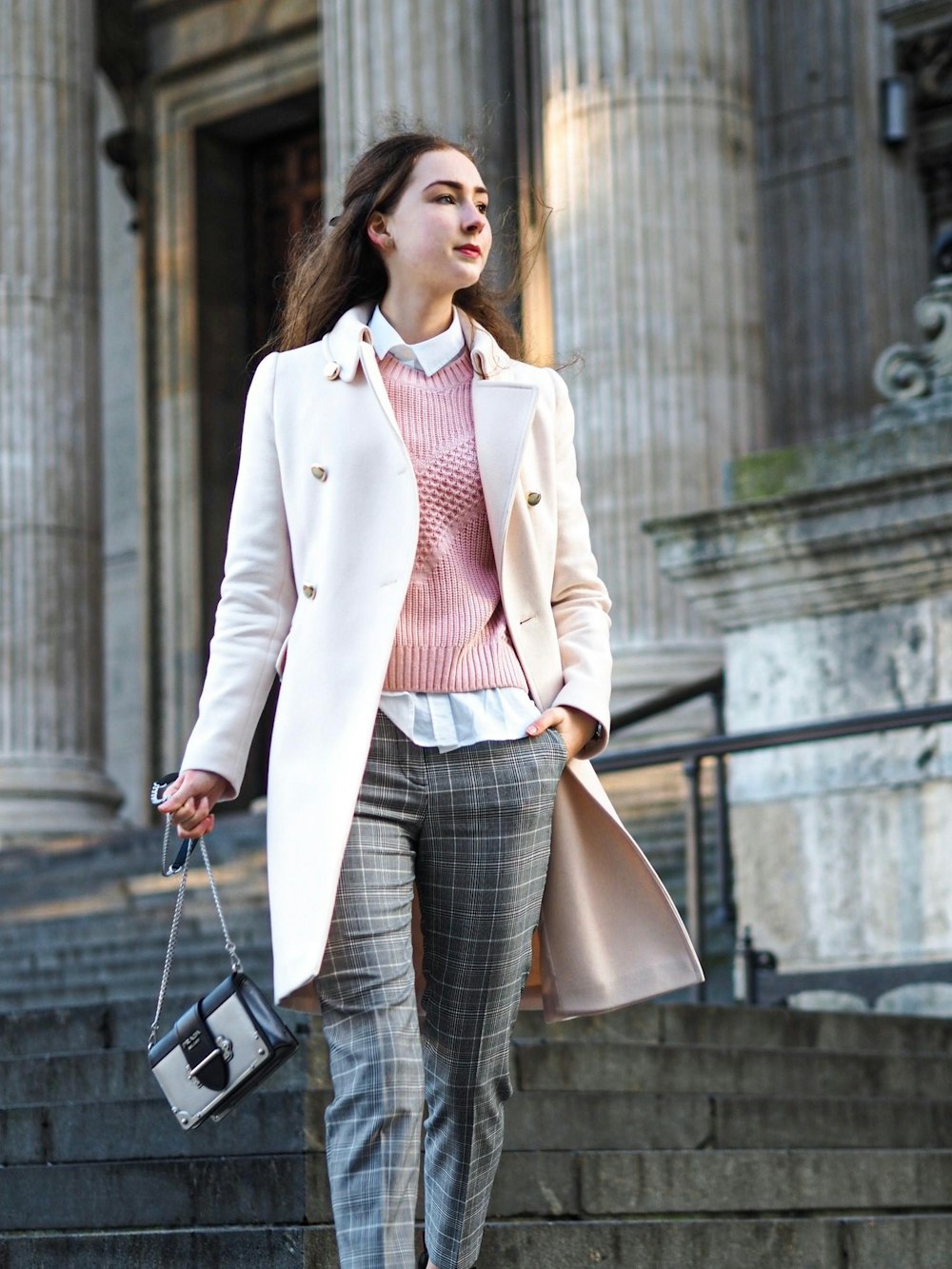
Bring the everyday layer into the fitting
A coat can feel comfortable over a thin fitting-room top and become awkward over the sweater worn on ordinary mornings. Start with the layer the coat genuinely needs to accommodate. Choose from clothes already used rather than adding several hypothetical thick layers.
Put the complete combination on and fasten it as intended. Keep the coat's product information available when assessing size and permitted use. A familiar size label is a starting point; the useful question is how the actual garment behaves with the intended outfit.
Move through three ordinary actions
Sit, reach forward and lift the bag normally carried. Notice whether the sleeve pulls at the upper arm, the cuff catches or the underlayer bunches. Check both sides, since the bag-carrying position may reveal something standing still does not.
Keep observations specific. The sleeve feels tight when reaching is more useful than the coat looks wrong. Compare another suitable size or shape where available rather than assuming a visual styling trick can correct restricted movement.
Check the cuff combination
Look at the coat and underlayer cuffs together. A visible sweater cuff can be an intentional detail if it remains practical, while an awkward bundle may make the combination uncomfortable. Try the arrangement with the hands doing an ordinary task such as opening the bag.
Do not alter a borrowed garment or an item still under purchase assessment without understanding the conditions and getting any needed permission. If alteration is considered, obtain suitable information about the actual work rather than assuming every sleeve can be adjusted simply.
Add the normal bag strap
Wear the bag with its usual manageable contents. Check whether the strap changes how the coat sits and whether the sleeves remain comfortable when the bag is picked up. A coat and bag can look good separately while creating an awkward daily combination.
Our coat-fit guide supports the broader check. The statement-coat guide helps with outfit partners once the movement test works. Choose practical fit before buying accessories to make an uncertain coat feel complete.
Keep a useful fitting note
Record the underlayer and bag used, plus the specific fit issue or successful combination. A private photograph can help with appearance, but the movement observation still matters. Follow the retailer's current assessment and return conditions where applicable.
If the coat already belongs to the wardrobe, try a different existing underlayer with a suitable profile before deciding on another purchase. Keep any care or repair task separate. The aim is a combination ready for an ordinary day, not a coat that works only during a carefully arranged photograph.
Sleeve-fit questions
Should the sleeve feel loose everywhere? Comfort and suitable movement depend on the garment and wearer. Test the actual tasks rather than applying one shape rule to every coat.
Can a thinner sweater solve tight sleeves? It may change the combination, but the coat still needs to support the intended conditions and use. Do not accept an impractical outfit solely to keep the purchase.
Must cuffs line up exactly? No. Judge the appearance and everyday handling together. A deliberate visible cuff can work if it stays comfortable and useful.
Read how we put our guides together, or flag a correction at [email protected].