Give the back a proper view
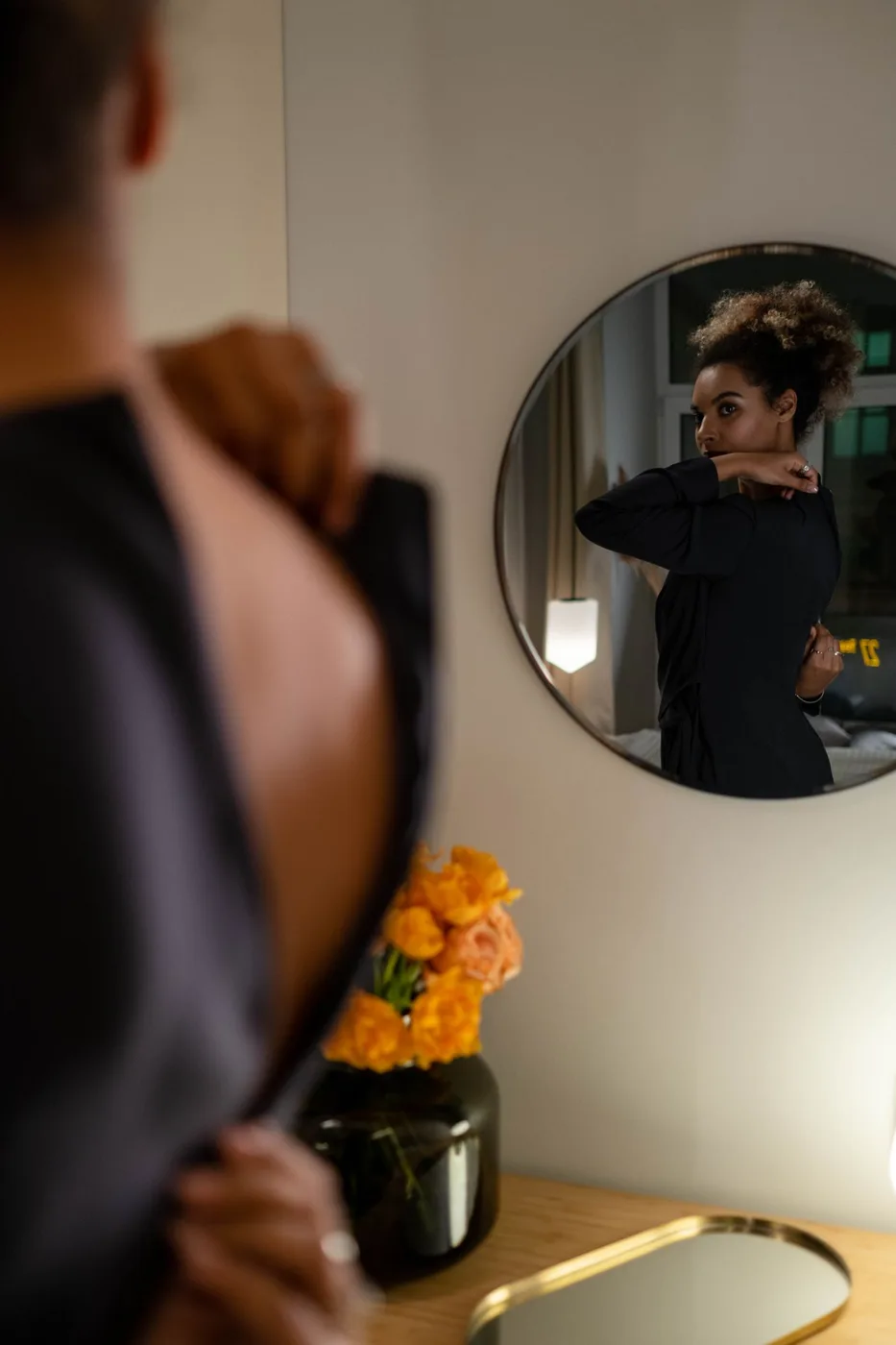
The front of a dress often receives most of the fitting-room attention. The back can reveal a different outline, an unexpected length relationship or a closure you cannot operate as easily as expected. Use a suitable mirror arrangement to see it clearly while keeping the shop's rules and your own privacy in mind.
Stand normally rather than twisting to create a flattering angle. A twist changes the fabric's position and can make the back appear smoother or tighter than it is during ordinary use. If the available mirrors do not provide a clear view, do not fill the gap with a guess.
Follow the garment's own lines
Look at the centre seam, fastening and any waist or shoulder details. Notice whether they sit in the positions intended by the design. A photograph of the same style on another person can explain construction, but it cannot establish how the dress fits you.
Compare the back with the front and side views rather than treating it as an isolated picture. A loose shape may be deliberate throughout the garment, while an unexpected pull confined to one area may need a different size or cut. Ask about the actual design when you are unsure.
Include ordinary movement
Use the fitting space appropriately to sit, stand and move your arms as the dress's intended use permits. Then look again. A garment can settle differently after movement, and a straightened display pose may not represent the outline you will keep through an ordinary event.
Check any fastening using its intended operation. If you need help reaching it, consider whether that fits your usual getting-ready routine. Do not force a zip, pin unfamiliar construction or assume an alteration will be simple without advice from someone qualified to assess the actual garment.
Compare the whole outfit
Include the layer or shoes you genuinely expect to wear where practical. A jacket can cover a back detail, while a bag strap may cross a feature you hoped to show. Those are outfit decisions, not necessarily faults in the dress.
If the back view changes your opinion, record why in plain language. “The closure is awkward for my normal routine” gives you a useful future reference. “Something looks wrong” is harder to act on when you see a similar garment later.
A good decision includes the views you will not see continuously yourself. Keep the dress only if its complete appearance and ordinary use suit the role you want it to fill. An attractive front photograph does not obligate you to overlook a back view that remains uncomfortable or simply unlike your preferred outline.
Related reading
Try a Dress for the Time You Will Spend Sitting, Keep Useful Notes About Clothes You Decide Against.
Read how we put our guides together, or flag a correction at [email protected].