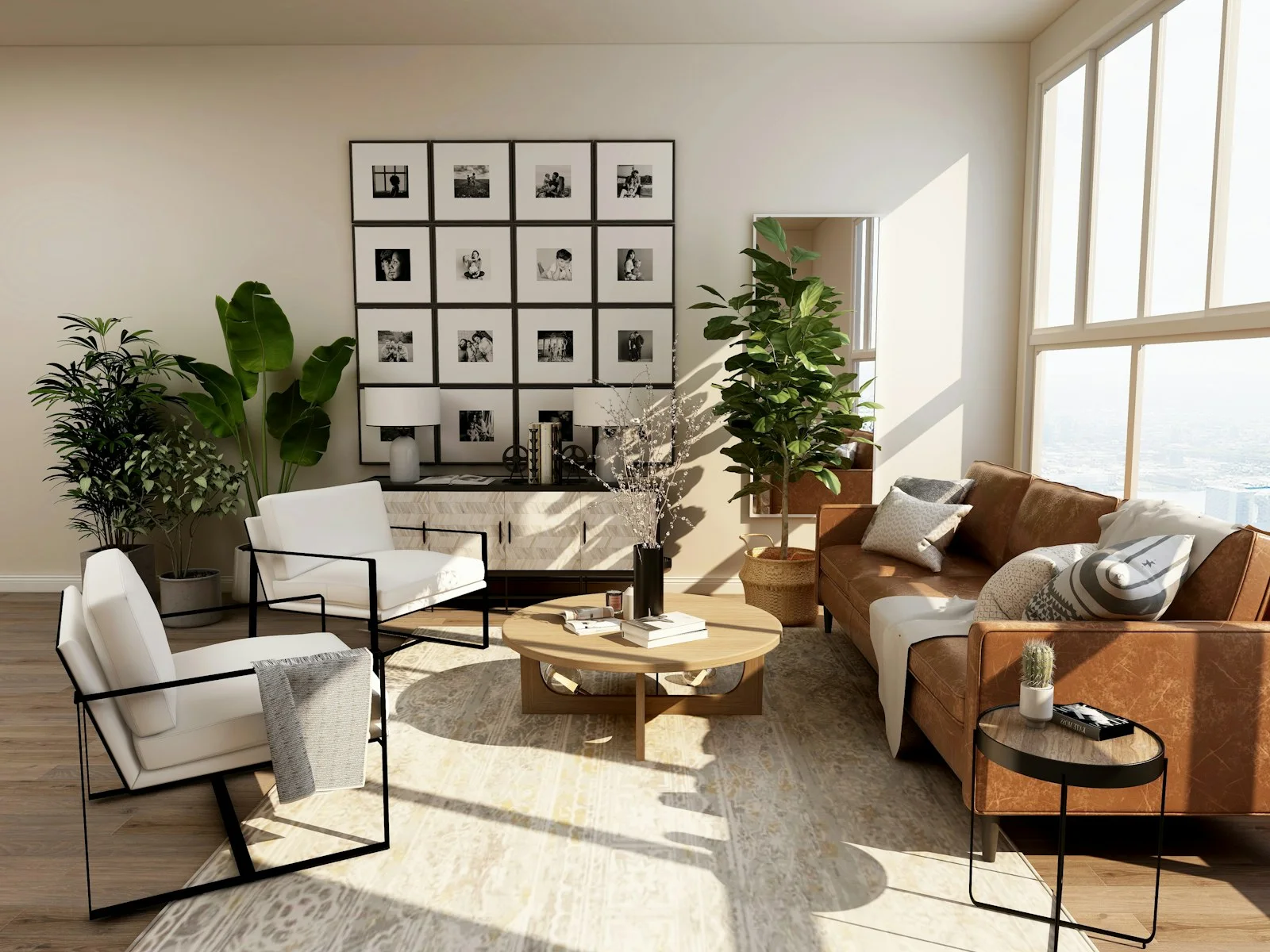
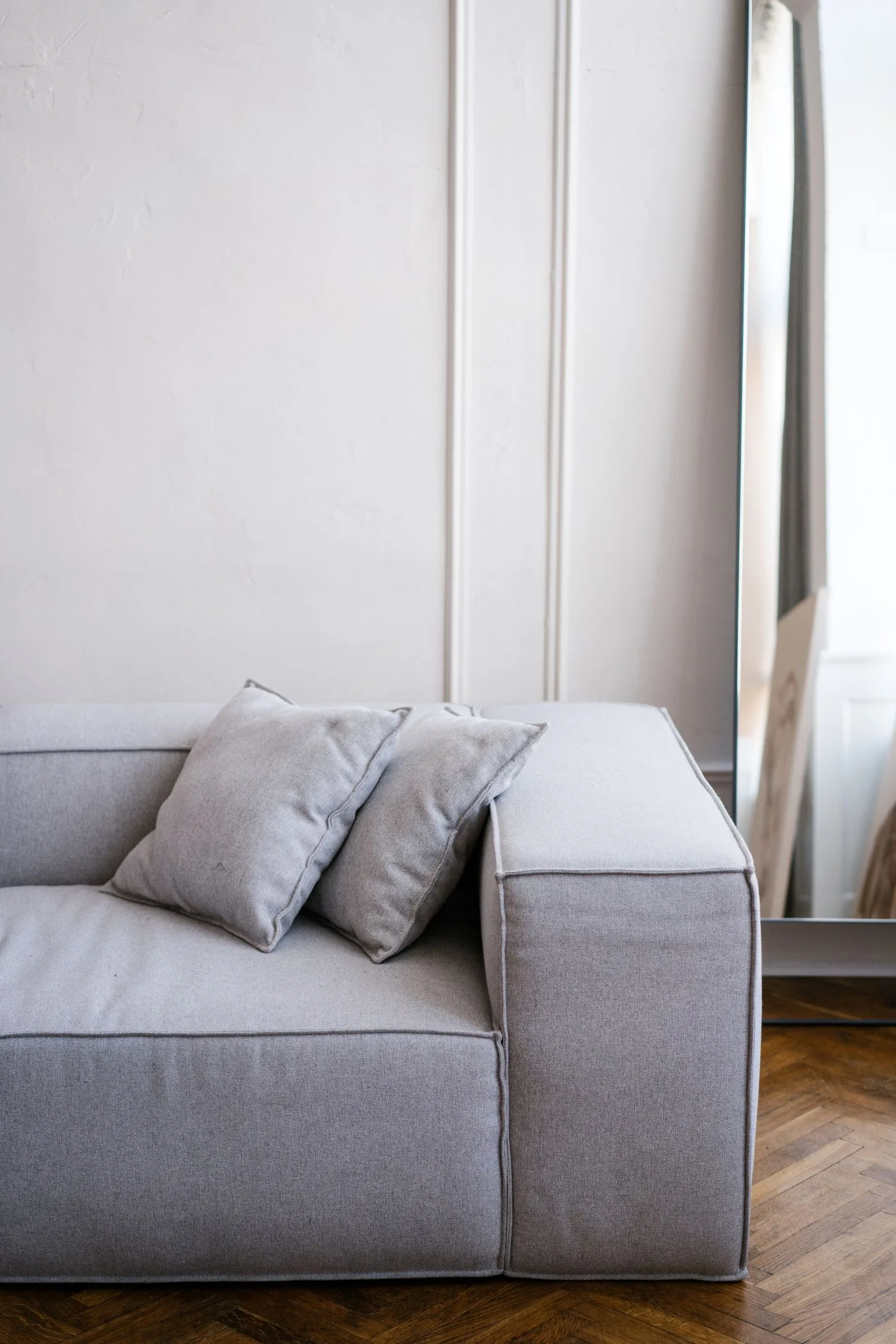
A mirror beside a sofa shows more than its frame. It can repeat a curtain, a doorway or a cluster of ordinary objects outside the main view. Look at that reflected room before adding another decorative piece to the corner. The visible group may already contain more detail than the wall alone suggests.
Observe from the normal seats
Sit where the sofa is actually used and look at the existing mirror. Notice which parts of the room appear from that angle. A reflection that looks quiet from the doorway can show a busy surface from the seat beside it.
Keep the comparison about the current arrangement rather than assuming a mirror needs moving. Any installation or repositioning requires appropriate product and wall guidance. A visual review alone does not establish a safe fixing method or suitable new location.
Separate frame from reflection
Look first at the mirror's own edge, finish and size, then at the objects it repeats. A plain frame can still produce a detailed group if it reflects several shelves. A prominent frame may need fewer nearby accents even when the reflected surface is simple.
Describe the main repeated elements in plain words. This makes it easier to see whether another proposed colour or pattern has a real role. Do not judge the corner only from a cropped photograph that excludes the mirror's visible contents.
Change the small movable group first
If a reflected surface feels crowded, review the ordinary objects placed there. Remove an unnecessary temporary item or return it to its proper home before buying another decorative container. Keep useful household objects accessible rather than hiding them solely to improve a reflection.
Check the view again after that small change. The mirror may now repeat enough of the curtain or wall to make the corner feel settled. There is no need to introduce a matching accessory to fill every area that appears in glass.
Include daylight and evening use
Look during the room's ordinary times of use, noting glare or distracting reflected light. Adjust suitable movable lighting within its intended use where appropriate, rather than improvising around an unsuitable installation. Keep the actual users' comfort part of the decision.
Compare the doorway view once more after checking the seated positions. A shared room needs more than one acceptable angle, not one perfect photographic composition.
If a decorative purchase is still being considered, identify exactly what it adds to both the direct and reflected group. A useful mirror corner is shaped by what it shows as well as what surrounds it, allowing a modest edit to the existing room before another object becomes the assumed solution.
Related reading
Compare a Framed Picture With the Room’s Retained Objects, Give Your Living Room a Softer Evening Mood.
Read how we put our guides together, or flag a correction at [email protected].