Choose suitable tableware before matching
A table can be set with retained pieces that do not belong to one matching collection. Begin with suitability for the actual meal and people, then decide how the visible pieces relate. An attractive decorative plate is not automatically appropriate for food use.
Check condition and the products' actual use and care requirements. Keep borrowed pieces identifiable where they appear. The goal is a workable shared meal with deliberate choices, not a rule that every family gathering needs a new coordinated tableware set.
Use one clear visual connection
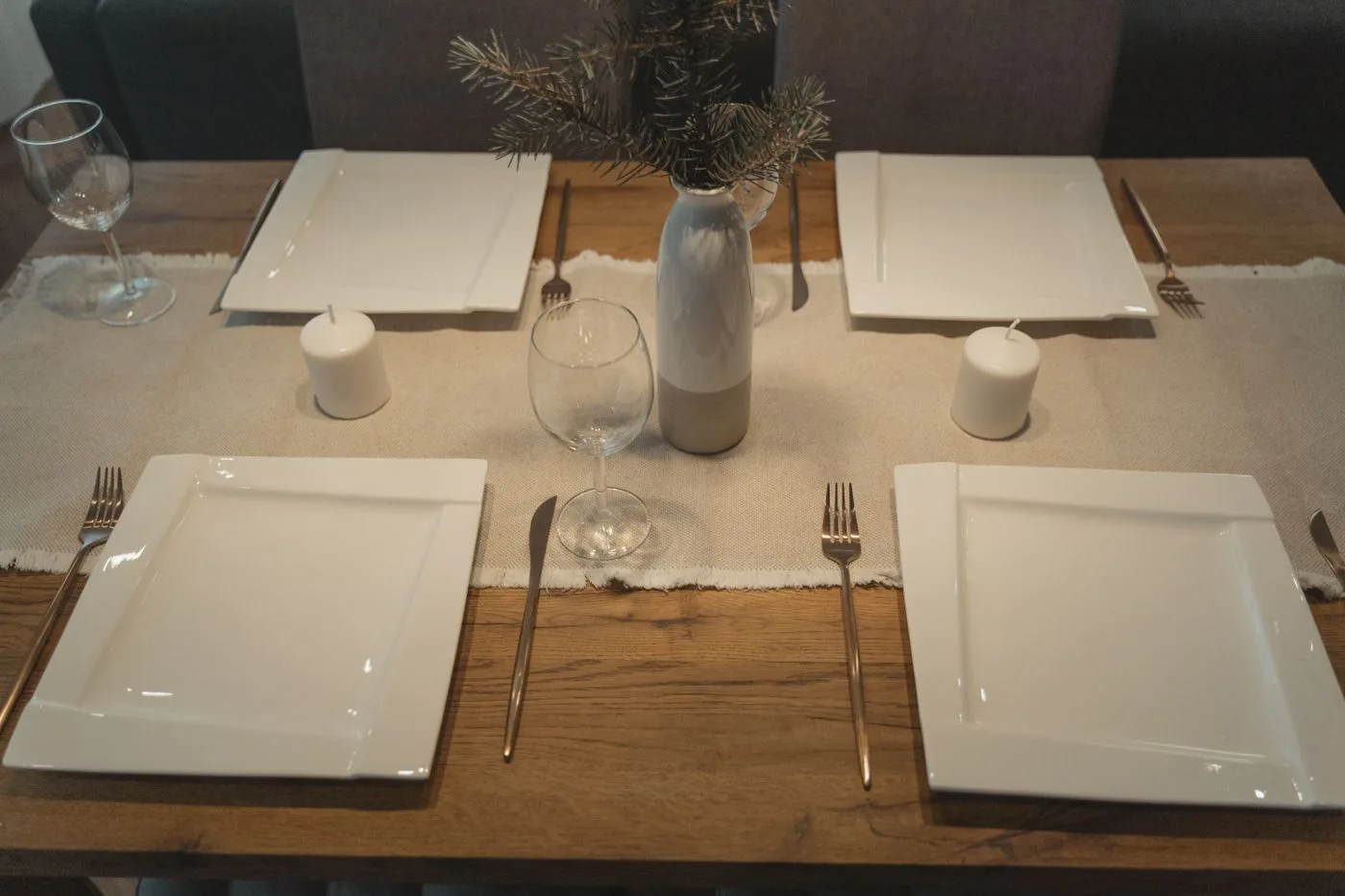
Compare the actual plates, glasses and other suitable pieces together. You might repeat a color, a material effect or a simple shape while allowing other differences. Choose the relationship you enjoy rather than trying to match every object in several ways at once.
Look at the setting from ordinary seated and standing views. A close photograph of one place can hide how the complete table appears. Include the retained table surface and suitable textiles where used, rather than planning from isolated product images.
Keep the occupied space usable
Arrange the actual place settings and seats before adding decorative objects. Include serving equipment, personal room and the appropriate route around the table. A mixed set can be perfectly deliberate without filling every visible area.
Our chair-and-table guide supports the occupied relationship. If a centerpiece obscures conversation or serving, consider a smaller suitable arrangement rather than buying extra accessories to work around it.
Explain any practical distinctions
Make important serving or individual requirements clear through the actual responsible arrangements. Do not rely only on a plate color or decorative marker where a mistake would matter. A moved object can otherwise create a misleading signal.
If helpers share the work, show them which equipment is intended for which task. Keep the explanation simple enough to follow during the meal. Visual coordination should support hospitality rather than conceal different requirements inside an attractive setting.
Include the return after the meal
Follow the tableware and textile care instructions and keep unfinished stages distinct from ready stock. Reunite borrowed pieces with their owner groups and agreed return plans. A mixed setting needs clear identity after use as well as a pleasant appearance beforehand.
Our shopping guide supports checking retained resources first. If one genuine gap remains, describe the specific useful piece needed. There is no obligation to replace the whole collection because the existing pieces differ.
Mixed-setting questions
Must plates and glasses come from one range? Choose suitable pieces with a deliberate relationship.
Can decorative color alone communicate important requirements? Keep those decisions explicit in the actual serving plan.
What if one piece is missing? Identify the real gap before buying a complete replacement collection.
Read how we put our guides together, or flag a correction at [email protected].