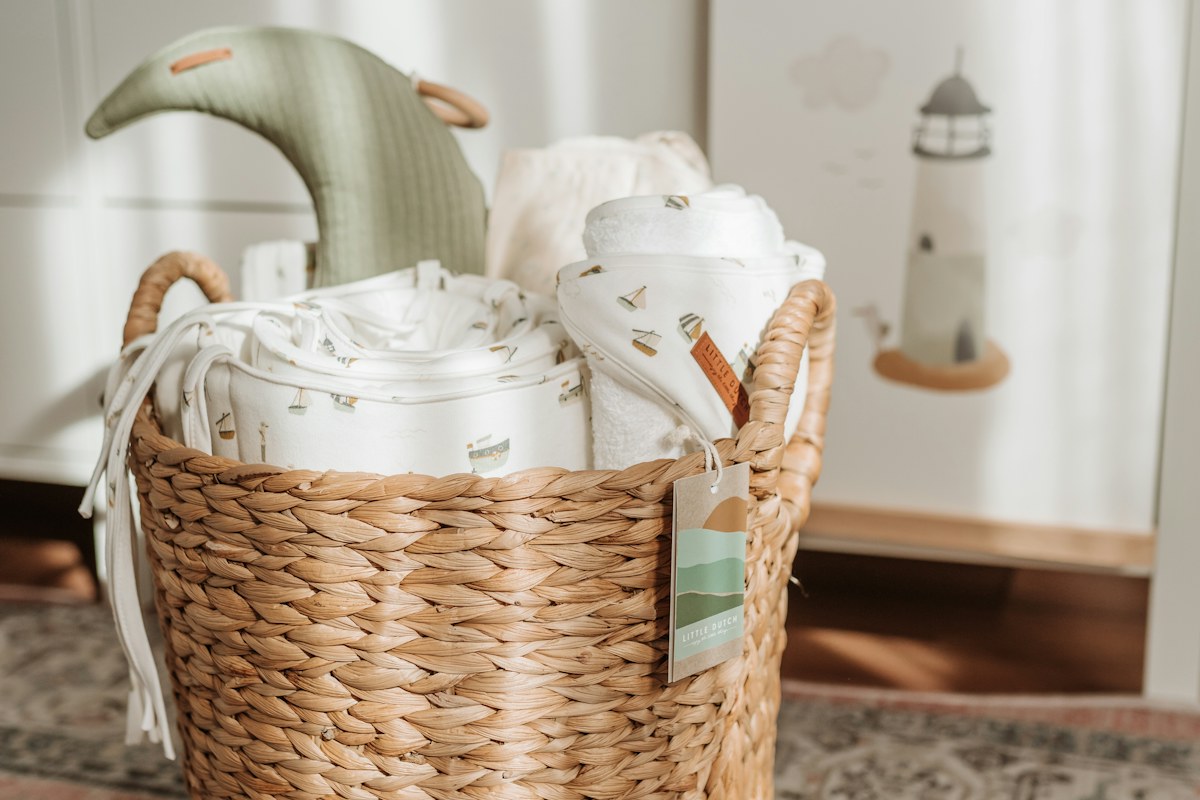
Start with the existing basket and textiles
Rolled textiles can look attractive in a basket, but a photograph does not establish that rolling is the best arrangement for every household item. Compare suitable rolled and folded forms using the actual reserve and container already owned. Follow each textile's care and storage requirements first.
Choose one coherent group rather than every spare fabric in the home. The useful question is whether the group can be identified, retrieved and returned appropriately. A display method should serve those tasks rather than make the household recreate a perfect row after every use.
Check the container’s real opening
Measure the basket's usable interior and opening, not only its outside dimensions. Include a liner or handle projection where present. A folded textile can fit inside while being inconvenient to remove through a narrower top.
Read the actual basket's load, material and care information. Do not force a textile into a shape that conflicts with its requirements or assume a liner makes every surface suitable. Keep both the container and contents in the comparison.
Compare one appropriate arrangement at a time
Where the textile's requirements allow, try a manageable folded group and then a manageable rolled group. Keep the number of pieces constant. Notice which identifiers remain visible and whether retrieving one piece disturbs all the others.
Avoid interpreting a tightly packed arrangement as greater usefulness. The household needs suitable access as well as capacity. A form that accommodates fewer ready pieces may still serve the actual routine better if it is simpler to return.
Include the next person’s view
Ask another person who uses the reserve whether they can identify the group and repeat the return. Explain any distinction that matters without creating a private folding code. A guest should not need to infer whether the rolled textiles are decorative or available.
Our ready reserve guide keeps care status separate from appearance. Rolling a piece does not make it ready for use. Keep unfinished care and uncertain condition out of the ready group.
Choose the simplest suitable result
Retain the form that works with the actual textiles and household. Different groups can use different appropriate arrangements. There is no requirement for every basket in a home to present the same visual pattern.
Our liner guide considers another container detail. Before buying a replacement basket, identify what the current arrangement cannot do. A change in the number or suitable form of the contents may answer the question without another purchase.
Rolling-and-folding questions
Is rolling always more compact? Compare the actual permitted forms and usable container space.
Must every textile be arranged alike? Use methods suited to each item's requirements and household role.
What if retrieval disrupts the whole display? Leave suitable return space and choose a less exacting arrangement.
Read how we put our guides together, or flag a correction at [email protected].